How I Accidentally Became Utah's Premier Teapot Storage Facility
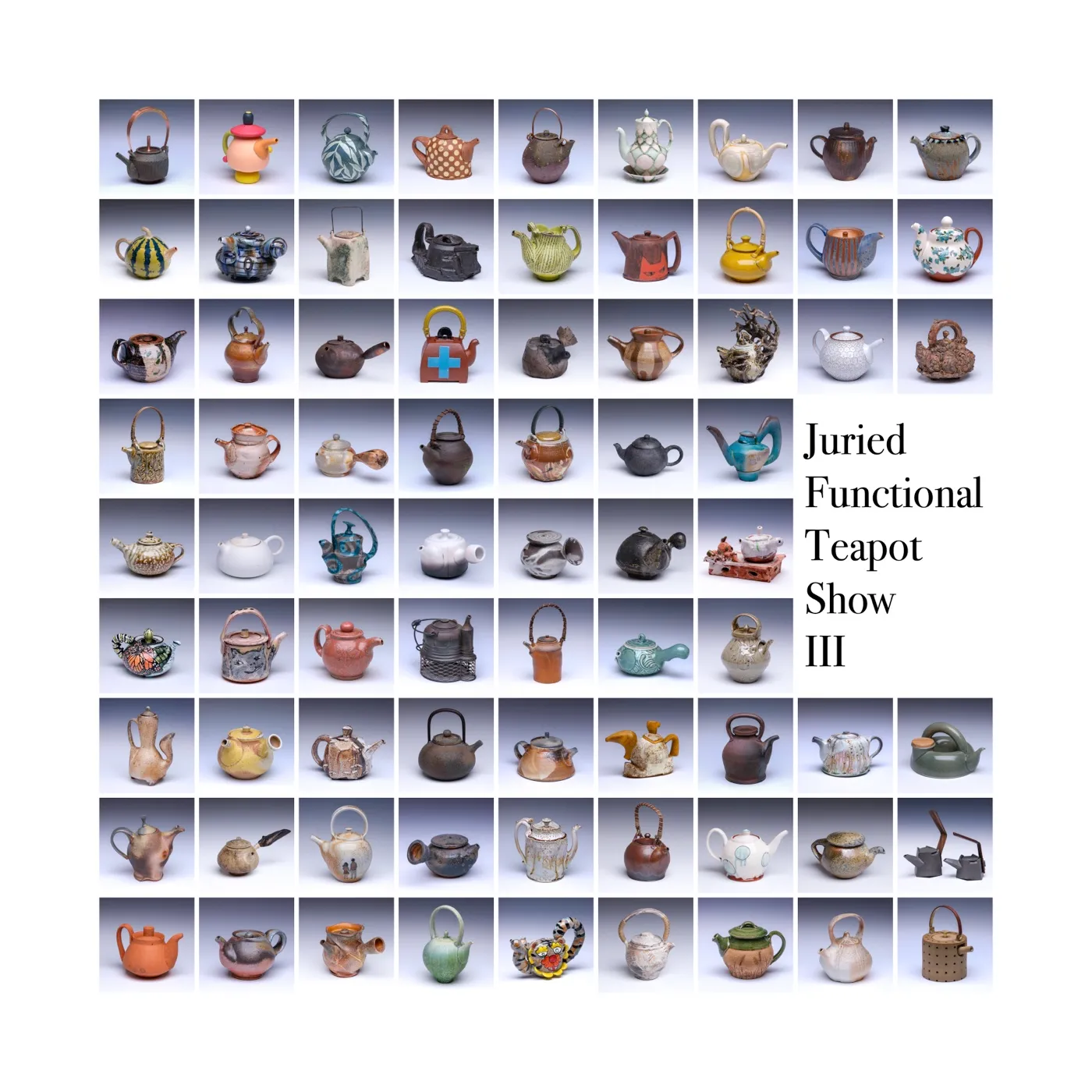
Download a free, high resolution PDF of the catalog on Hamish Jackson’s site.
I
In April 2024 I drove up to Utah State University to see Hamish Jackson’s Master’s Thesis show, eager to view the results from what three years of grinding granite into dust and sticking it to pots will do.
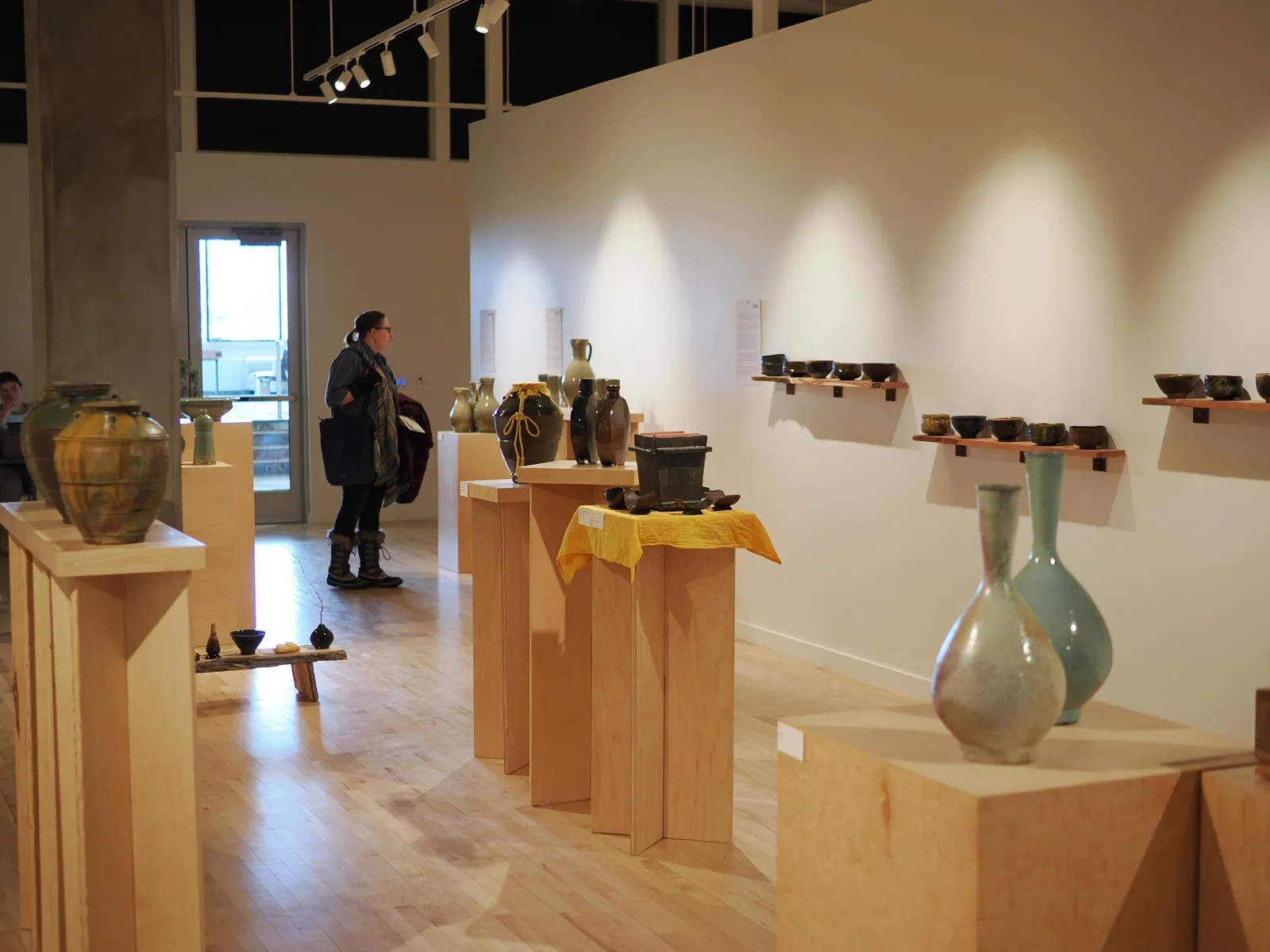
Hamish’s thesis show at Utah State. Courtesy of Hamish Jackson.
He called it Tea Time with the Devil, a nod to his many afflictions: of being a functional potter, of being English, and of being an outsider to Utah and its prevailing culture.
But the reality was Hamish, a tea fanatic, had spent those years driving out to a place called Devil’s Playground in the far northwest corner of the state, hauling devilish granite back by hand, and crushing it down into powders that would make the basis of a glaze.
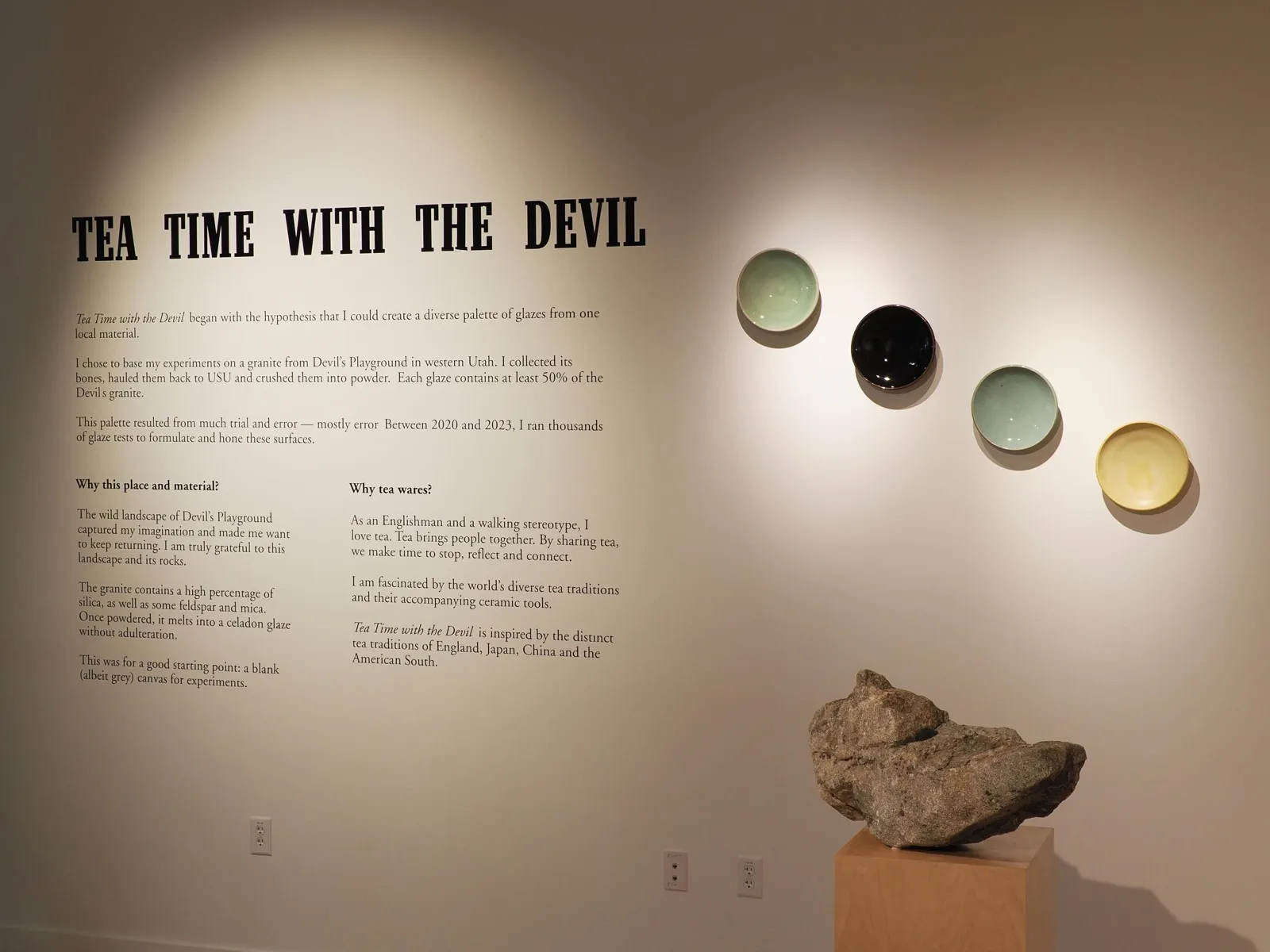
The statement wall. Courtesy of Hamish Jackson.
Hamish and I are both hopeless romantics, and grinding up rocks for glazes comes across as insane when most people’s experience with a pottery glaze is unscrewing the lid of a jar and grabbing a brush. But once you see the results, the idea magically rearranges itself into the only sane thing a person could have done. Nothing was standing in the way except a willingness to go do it.
His mentor was John Neely, an educator who spent forty-one years at USU and believed a potter ought to understand not just form and surface, but the chemistry and the geology of what passes through their hands and the places and events that put the finished work back in them. So he made his ceramics majors take the science, and taught them how to be educated consumers.
If you are going to turn earth into something that survives fire, he thought, you should know what the earth is. If you want to know how a pot gets used, you need to spend time using them in the kitchen.
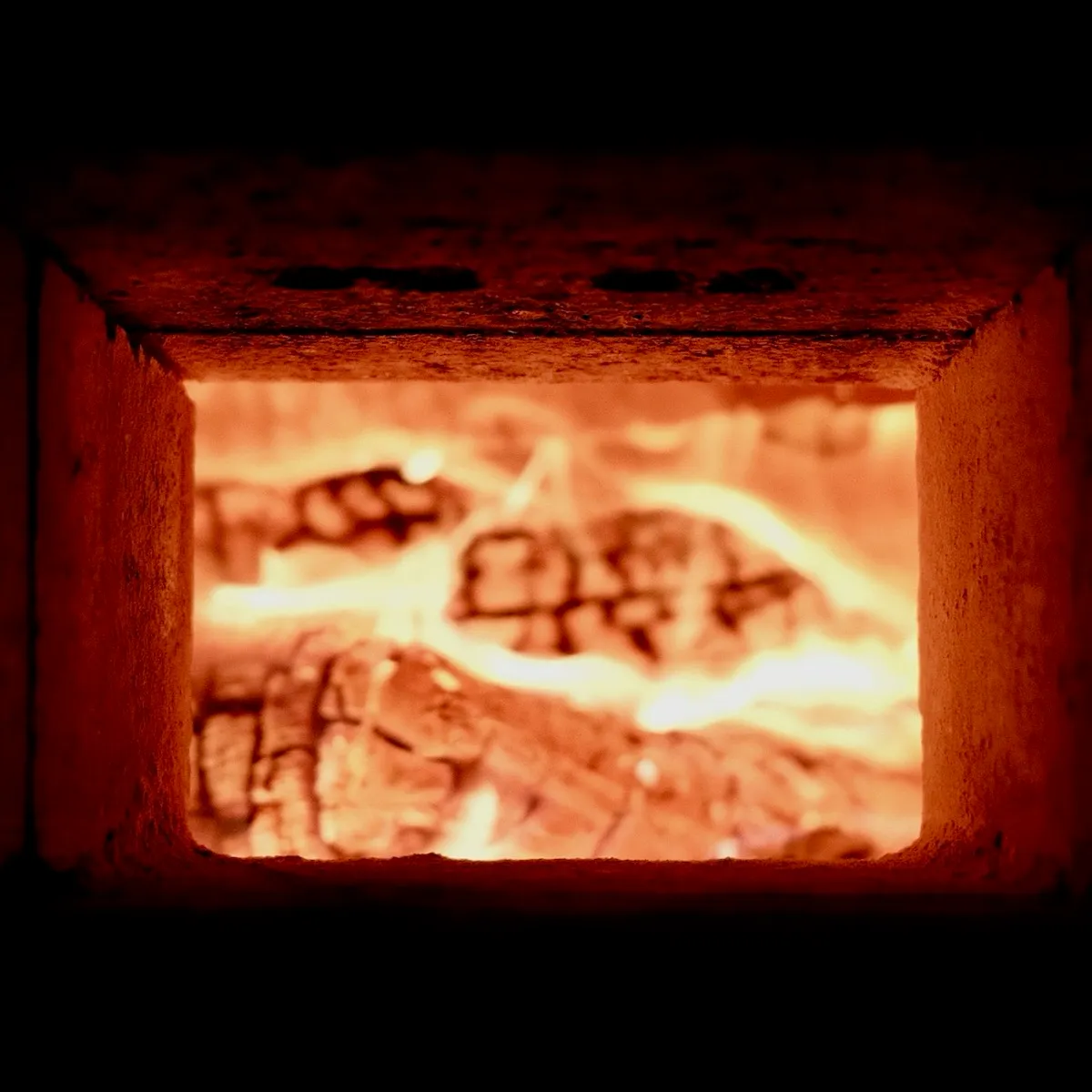
I like to imagine John’s smiling, spectacled gaze as Hamish initially pitched his thesis to him, maybe with a long-held dramatic pause where the only thing breaking the silence is the distant sound of grinding stone, but undoubtedly John knew he would find something in this work. Success, failure; both useful tools to further an obsessive education.
Wielding reverse psychology, critique, and a magpie’s hoard of collected language, John had an uncanny knack for actually being encouraging. That knack may have been rooted in something he caught on to as an educator: “It’s the students that are obsessed that usually succeed.” Obsessed people don’t give up easily. I’ve wondered if this wasn’t him describing his students so much as himself.
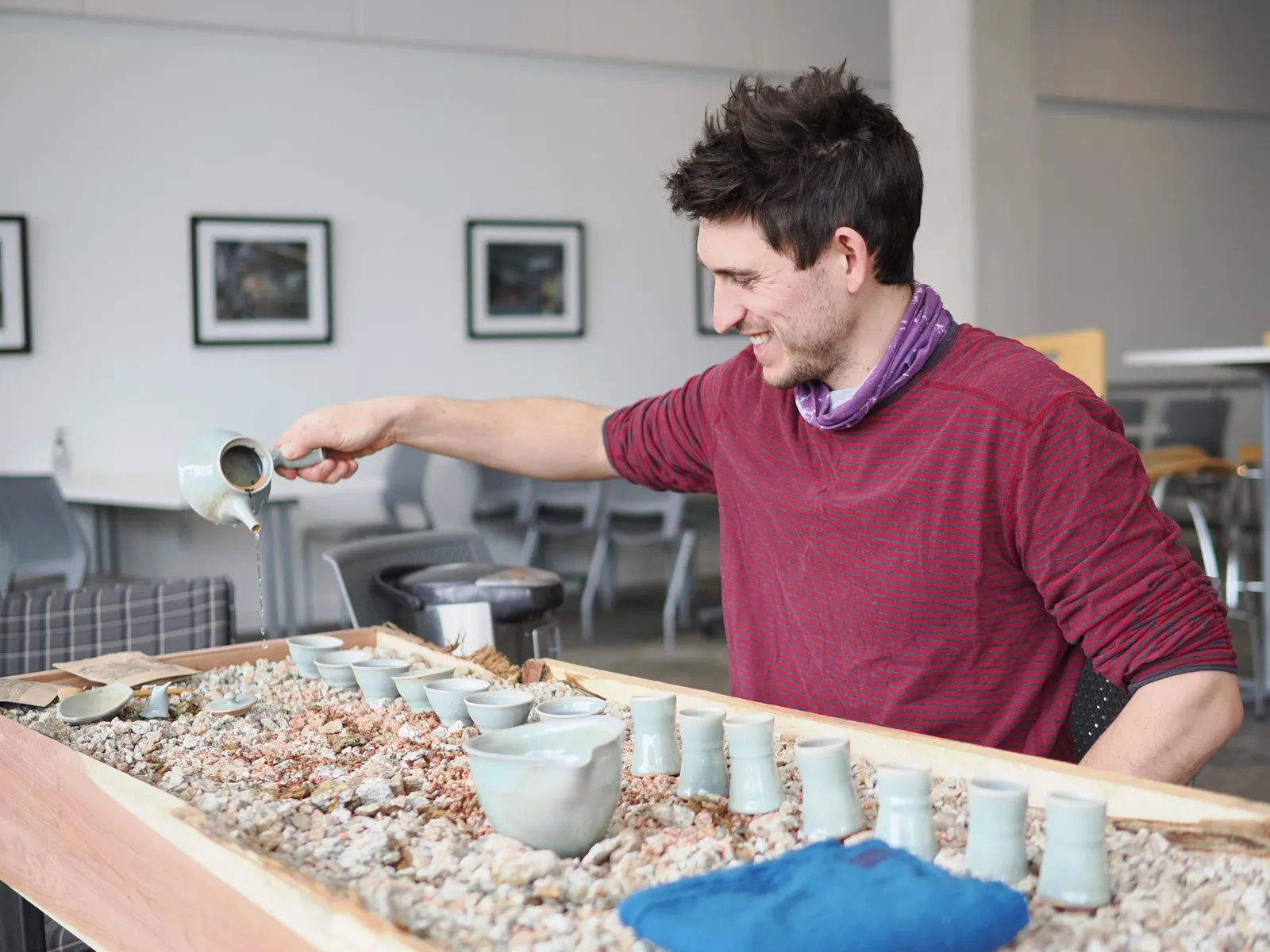
Hamish serving tea. Courtesy of Hamish Jackson.
Besides, if the show failed to be great, the food would carry it. John would also say you could judge the quality of a ceramics program by the quality of its food, and Hamish, like most potters, knows how to put on a spread.
Given that, I must have been munching on some taleggio when Antra Sinha found me, asking if I’d heard that NCECA was coming to Utah the following spring. I live under a rock in this community, so naturally I hadn’t, but NCECA is the national ceramics conference here in the states, one I’ve wanted to attend but never prioritized.
Antra was to be an official liaison for the 2025 conference, and I immediately blurted out a request to help. This is a dangerous sentence in the mouth of a man who will agree to almost anything for the promise of an afternoon among people who love the same difficult thing he does (doubly dangerous when full of cheese).
II
By autumn my involvement with NCECA had me chairing the conference’s hospitality committee, which would turn out to mostly mean chairing the front seat of a rental van, ferrying exhibition materials to galleries scattered across Salt Lake.
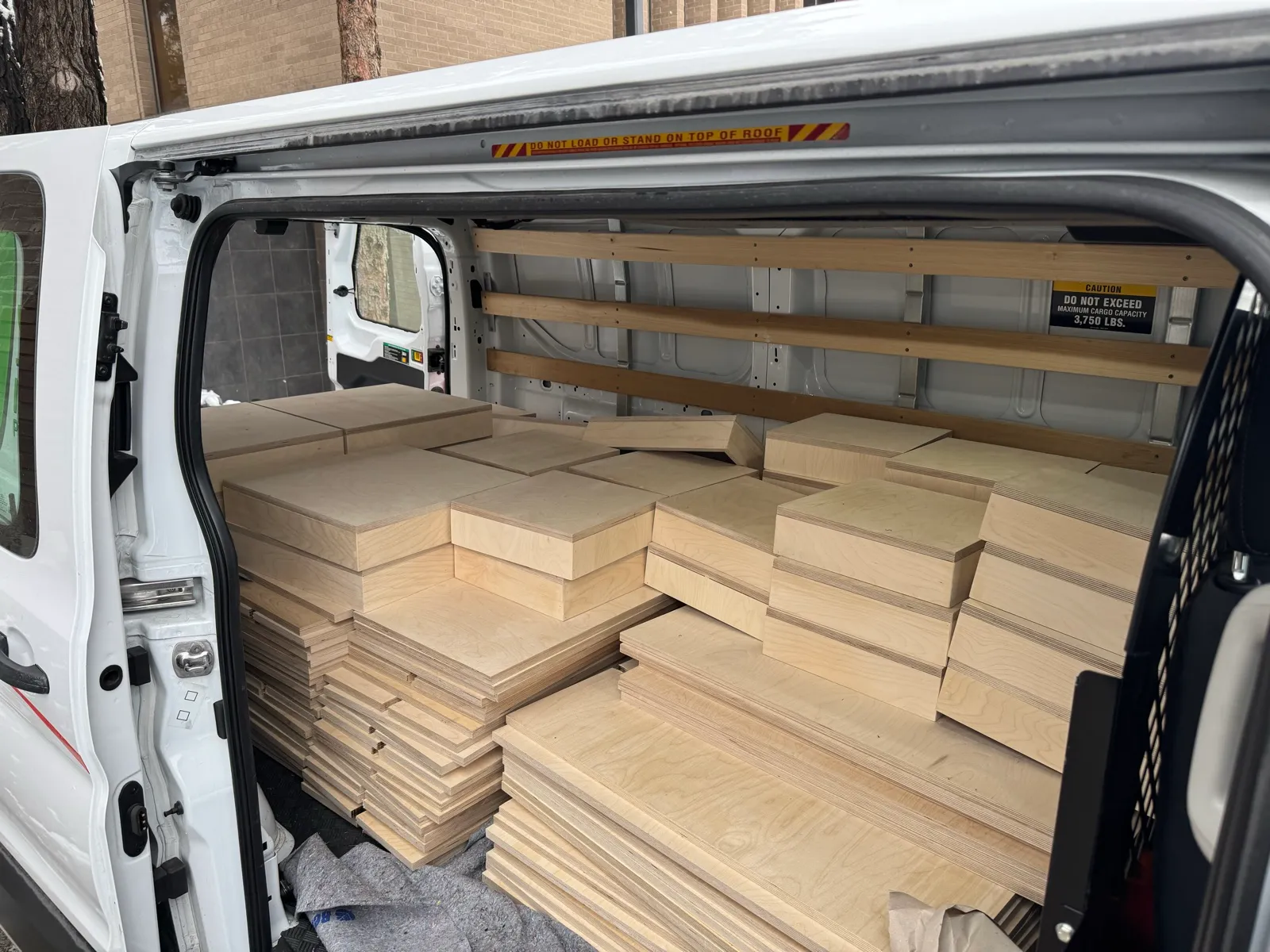
Hamish heard I had been helping and gave me a call one afternoon, dropping an idea about doing a functional teapot show. This wouldn’t be a sanctioned NCECA exhibition, just Hamish’s own idea, timed to land while several thousand potters would be in town.
A wrinkle in his plans was that he’d moved out of Utah to do a residency at Pleasant Hill in Oregon. He must have overheard me tell Antra through mouthfuls of accoutrements “I ROFF TO BE HULPFFURL!” when it comes to volunteering. My special allure must have also been that I’m a resident of the Salt Lake area, making me an appealing point of logistical centrality.
Hamish had done a couple of these shows before and the idea of a third had grown in his mind the way the good ideas always do: quietly and then all at once.
An earlier show had exhibited ten teapots. For Salt Lake he wanted more. A hundred, he said over the phone. I talked him down to something like seventy, and even that number sat heavy in my stomach.
Nervousness aside I eagerly agreed to offer my help, banking on my potter optimism. We have a durable constitution, after all! We choose to work with a material that can, on more occasions than we care to admit, gleefully do the exact opposite of what we intend.
I guess the ones who make peace with that and keep going tend to assume that other things must eventually work themselves out.
III
We spent the tail end of the year looking for a venue, which wasn’t going very well. Hamish searched galleries from Oregon while I wandered the coffee shops near the Salt Palace, imagining teapots on their shelves. He found a place near the Salt Lake City Library; it fell through.
Nothing in this kind of work is real until it is happening in front of you.
But one day the news we’d been hoping for arrived, from a direction we hadn’t thought to look.
Josh DeWeese had been given an exhibition space larger than he needed, and NCECA agreed to have it partitioned so we could have twenty feet by twenty of it, tables included.
This was huge. It moved us from some gallery a visitor might stumble on by accident to the actual convention center. It also meant I wouldn’t have to get creative in sourcing twenty long tables and tablecloths.
See! Things do eventually become right!
IV
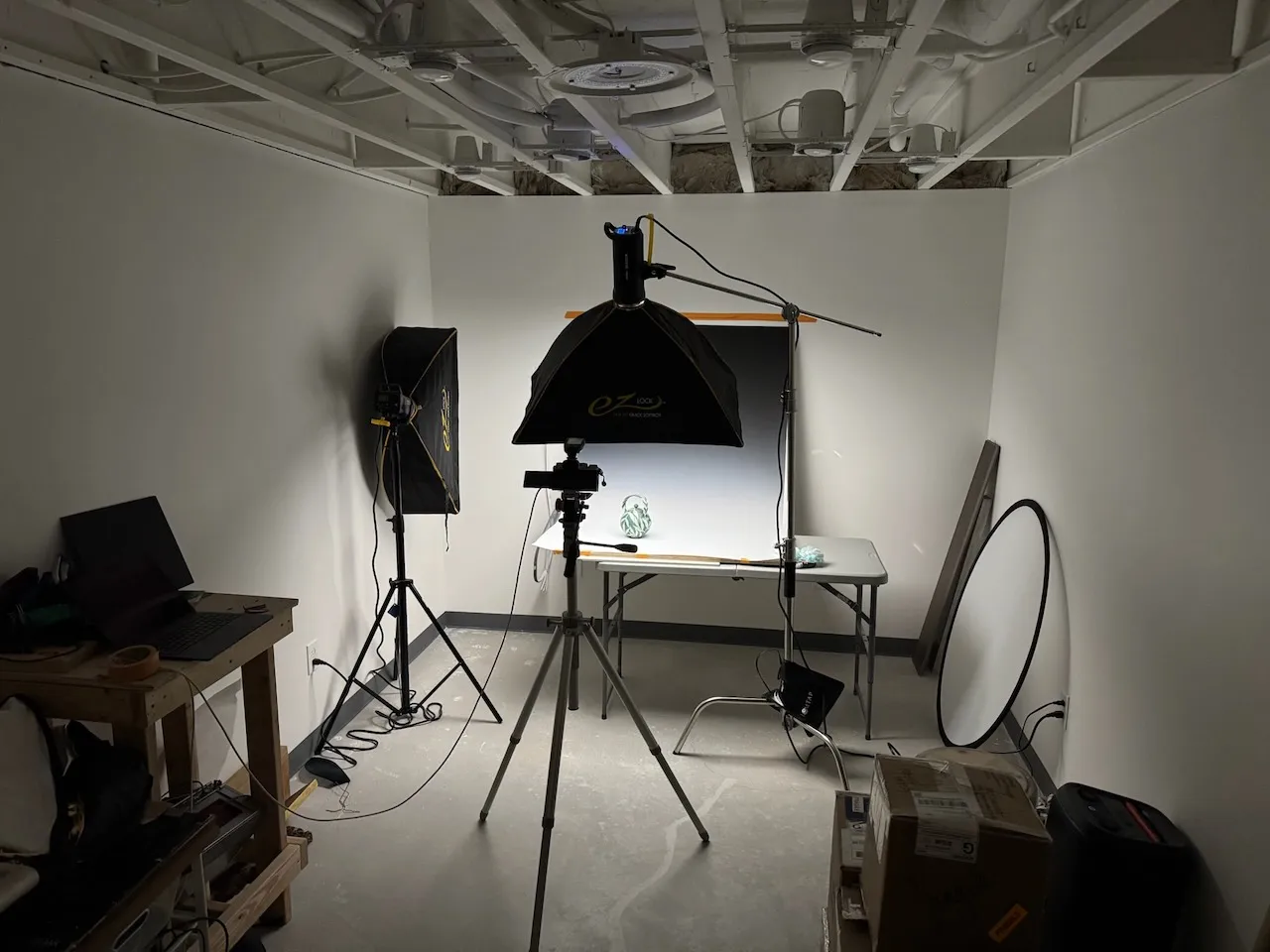
Somewhere in all this I also offered to photograph the teapots. It made sense because they would be at my house, I own a good camera setup, and in an earlier and more uncertain chapter of my life I was eager to let people call me a photographer.
While I had never done product work, I stepped into this with the overconfidence of any enthusiast. Hamish wanted to make this something grand, real, and tangible; I was determined to make it happen.
In any craft, maybe in any-everything actually, a lack of consistency is what breaks you. A single teapot shot in January under one set of lights and another shot in March when you’ve had to move and rearrange things will never look like they belong in the same show. I knew I had to patiently wait for all of them to arrive before I could begin in earnest.
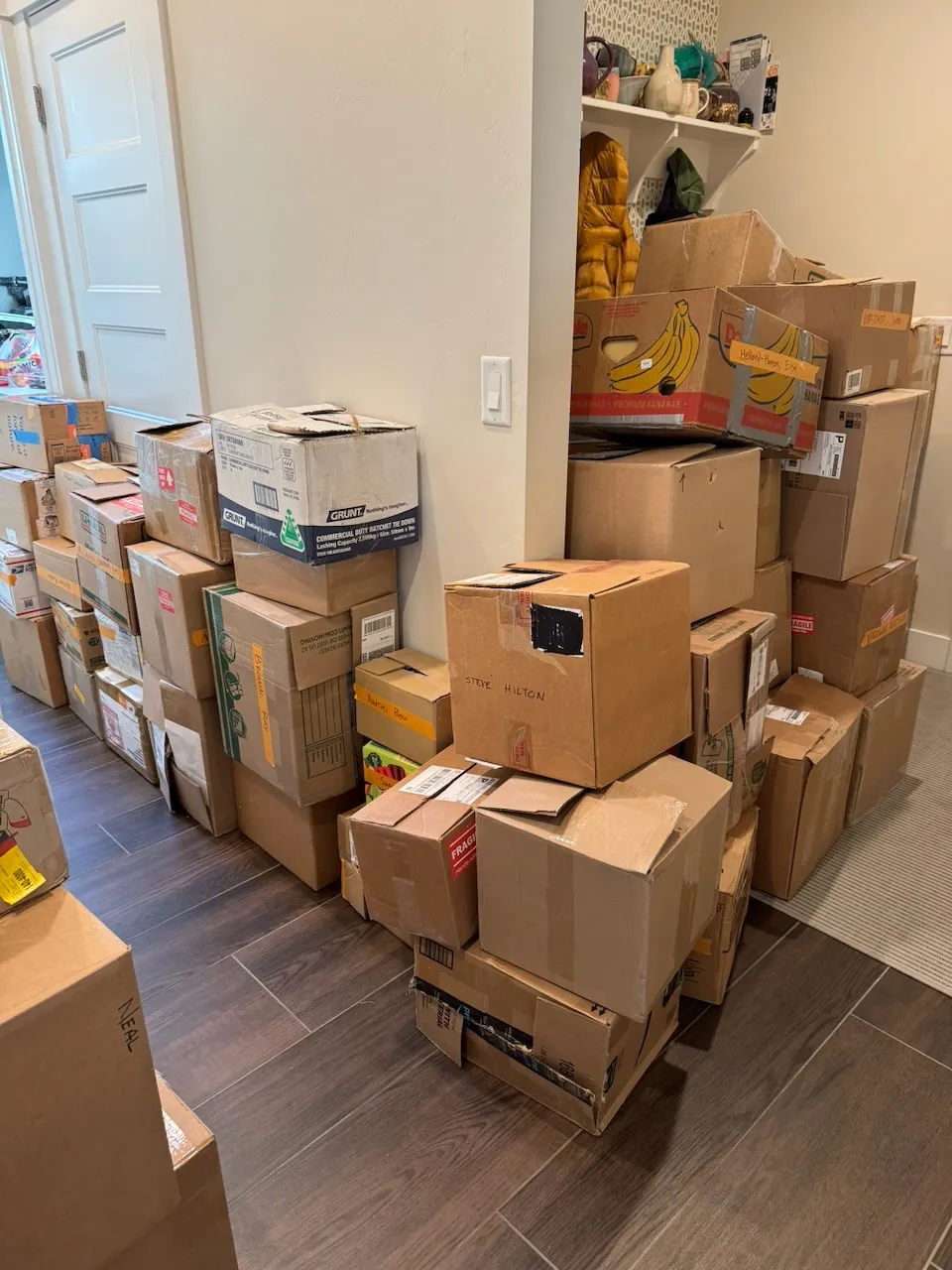
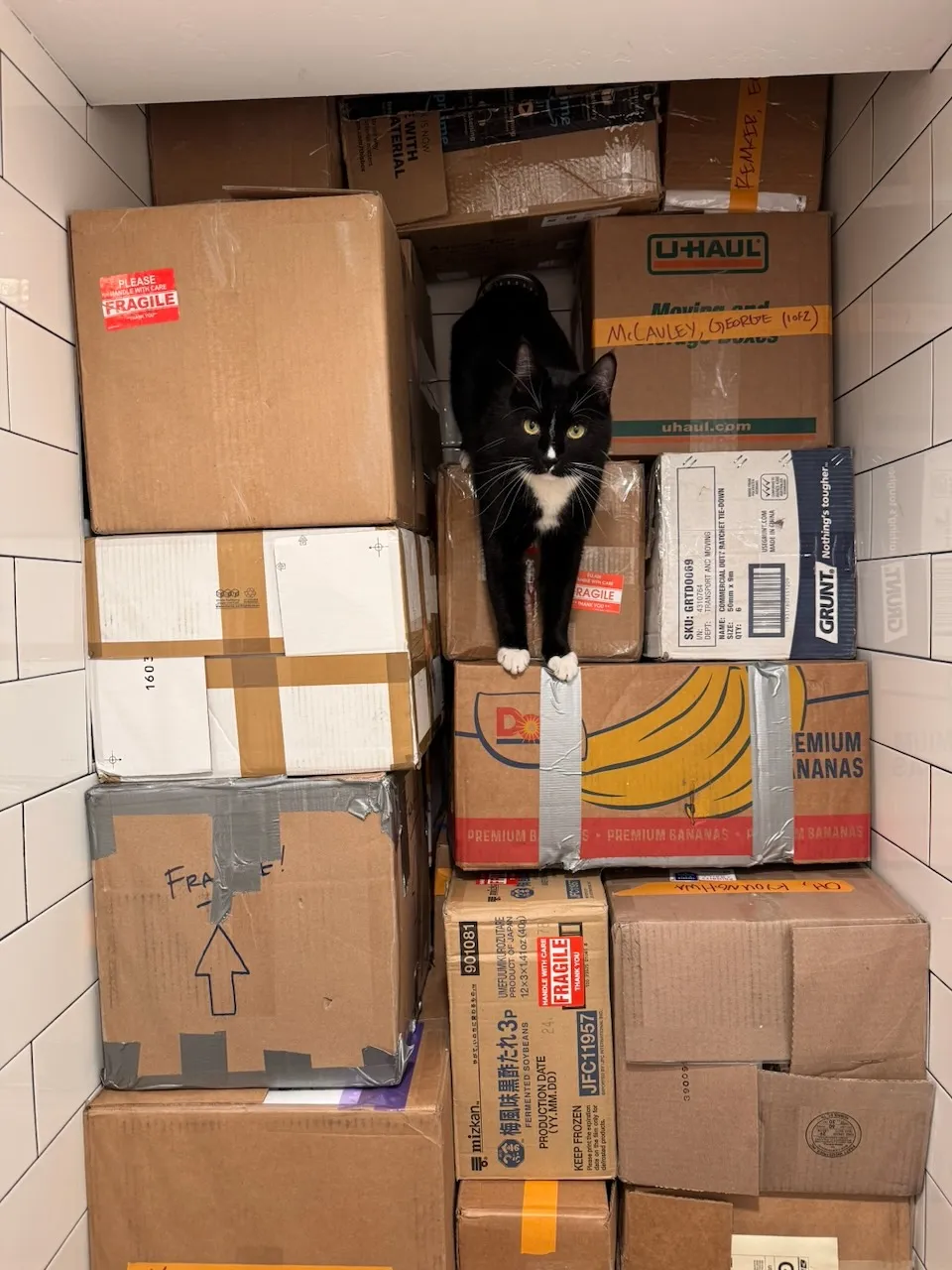
A reasonable plan until the reality of “where am I going to keep 76 boxed up teapots?” hits you.
Prior to me becoming a storage facility, Hamish and his fellow jurors, Elisa Helland-Hansen and Anne Mette Hjortshøj, spent the better part of a day working through more than three hundred entries over a video call before they settled on the seventy-six. When they were done, Hamish gave every one of those artists my home address.
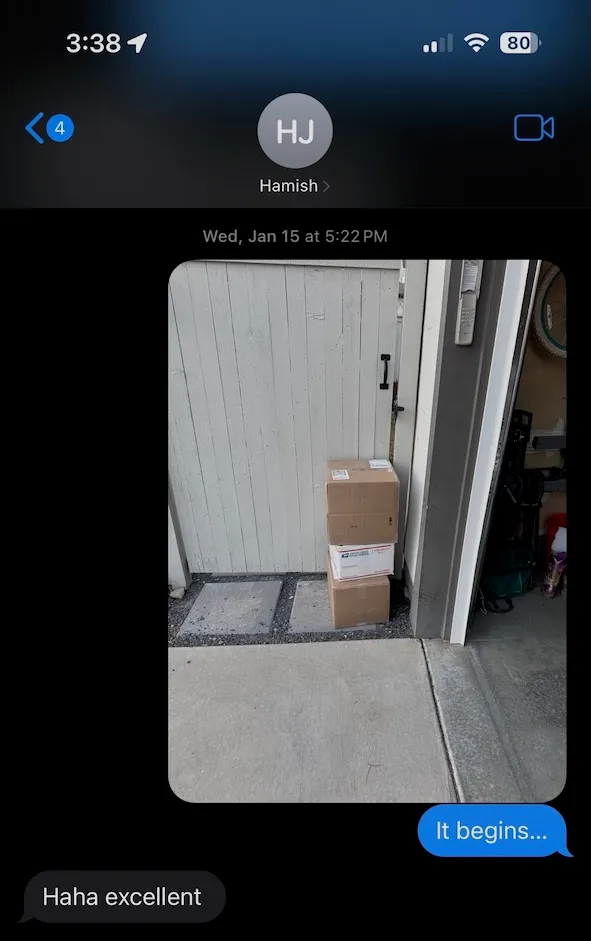
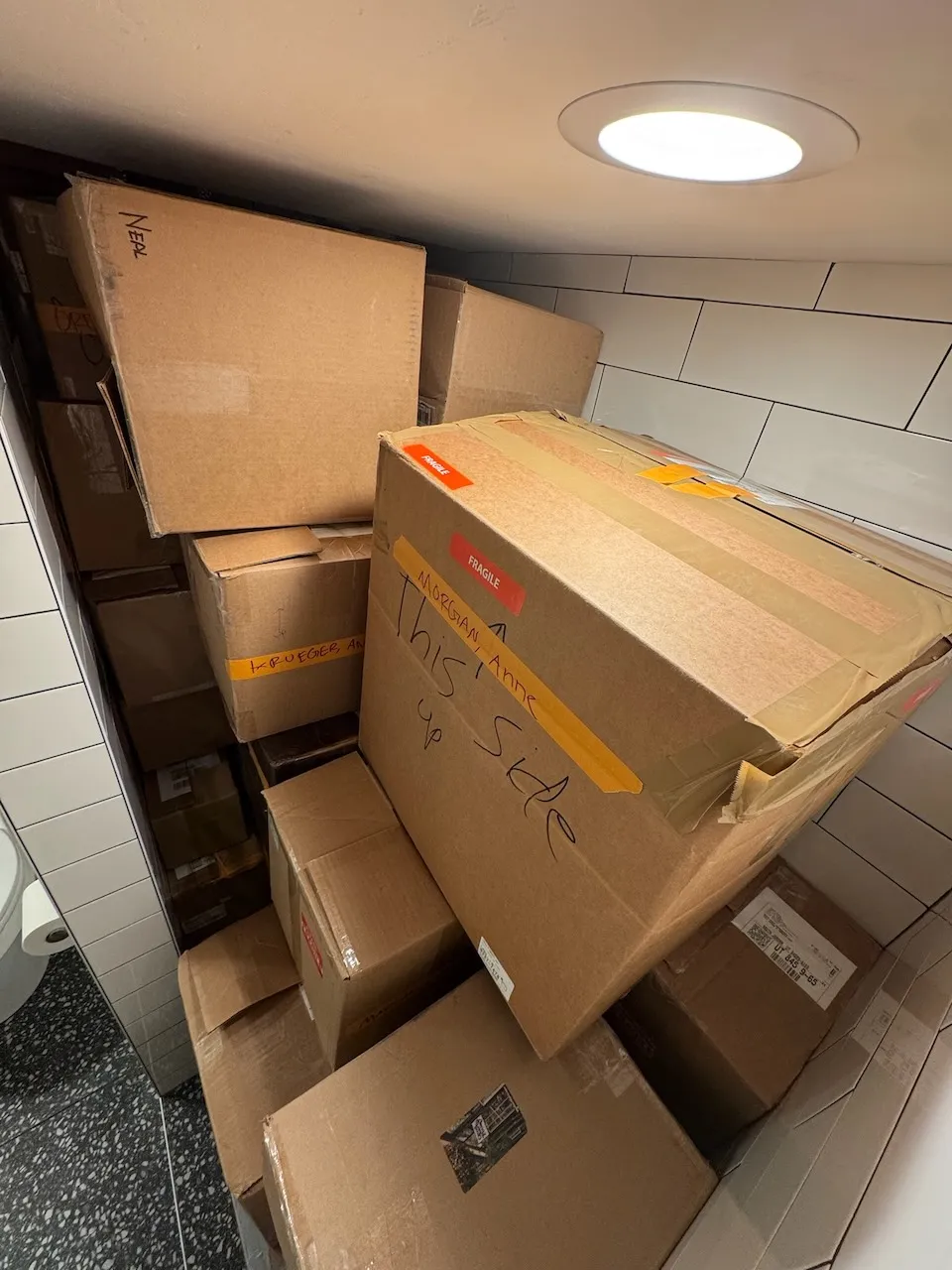
The packages came daily, from potters on three continents. Some arrived swaddled in enough material to ferry something fragile into orbit. Others came in almost nothing at all, as though the maker had decided to leave the outcome to fate and a postal worker. Miraculously, not a single one of them was damaged.
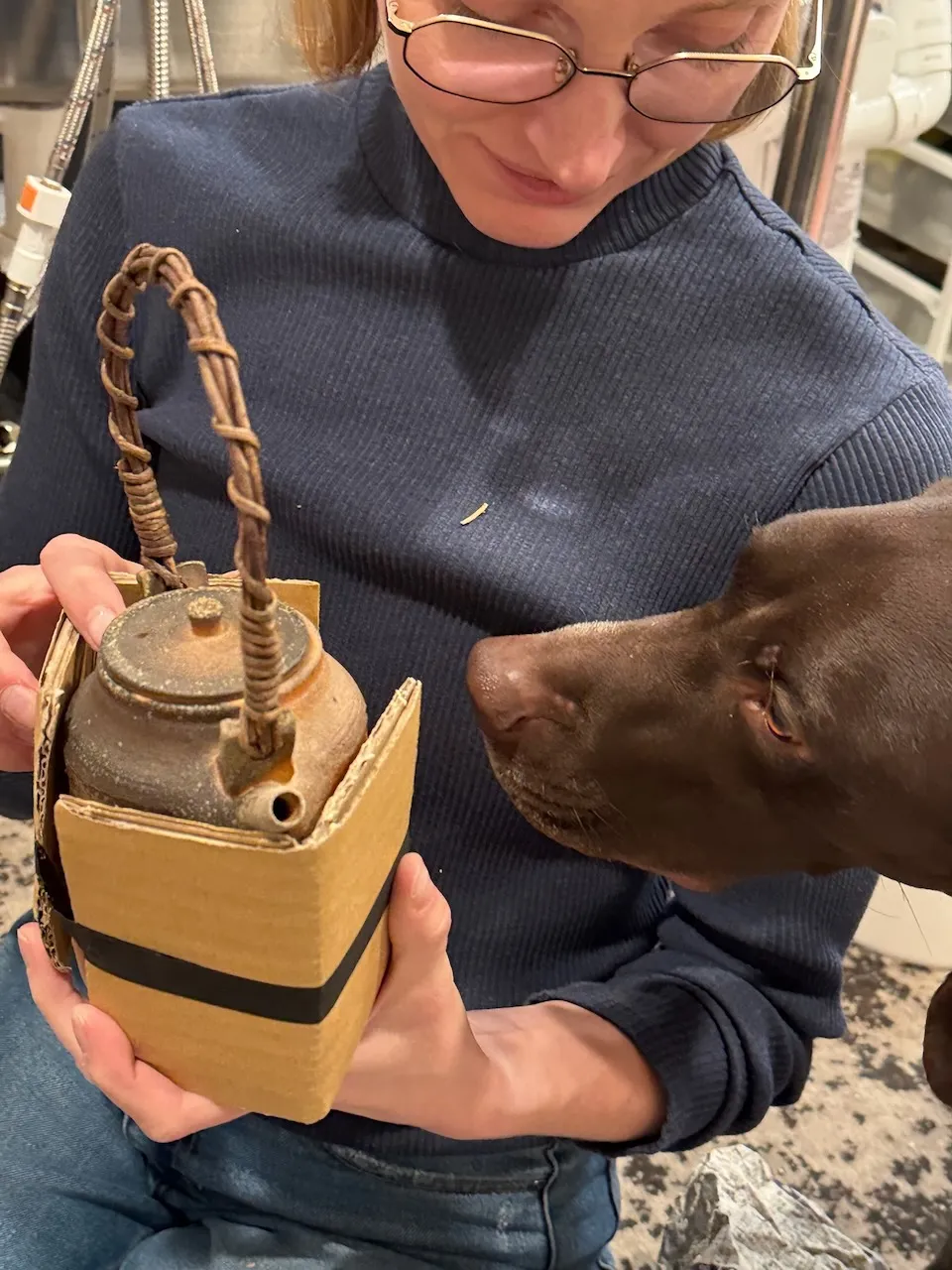
76 teapots, where to keep them? I kept them in the basement shower, of course. It was the only space in the house that could hold that many pots and keep them clear of the ordinary disasters of family life, which were considerable, since I had also chosen that winter to have part of the house torn open and rebuilt for my own pottery studio.
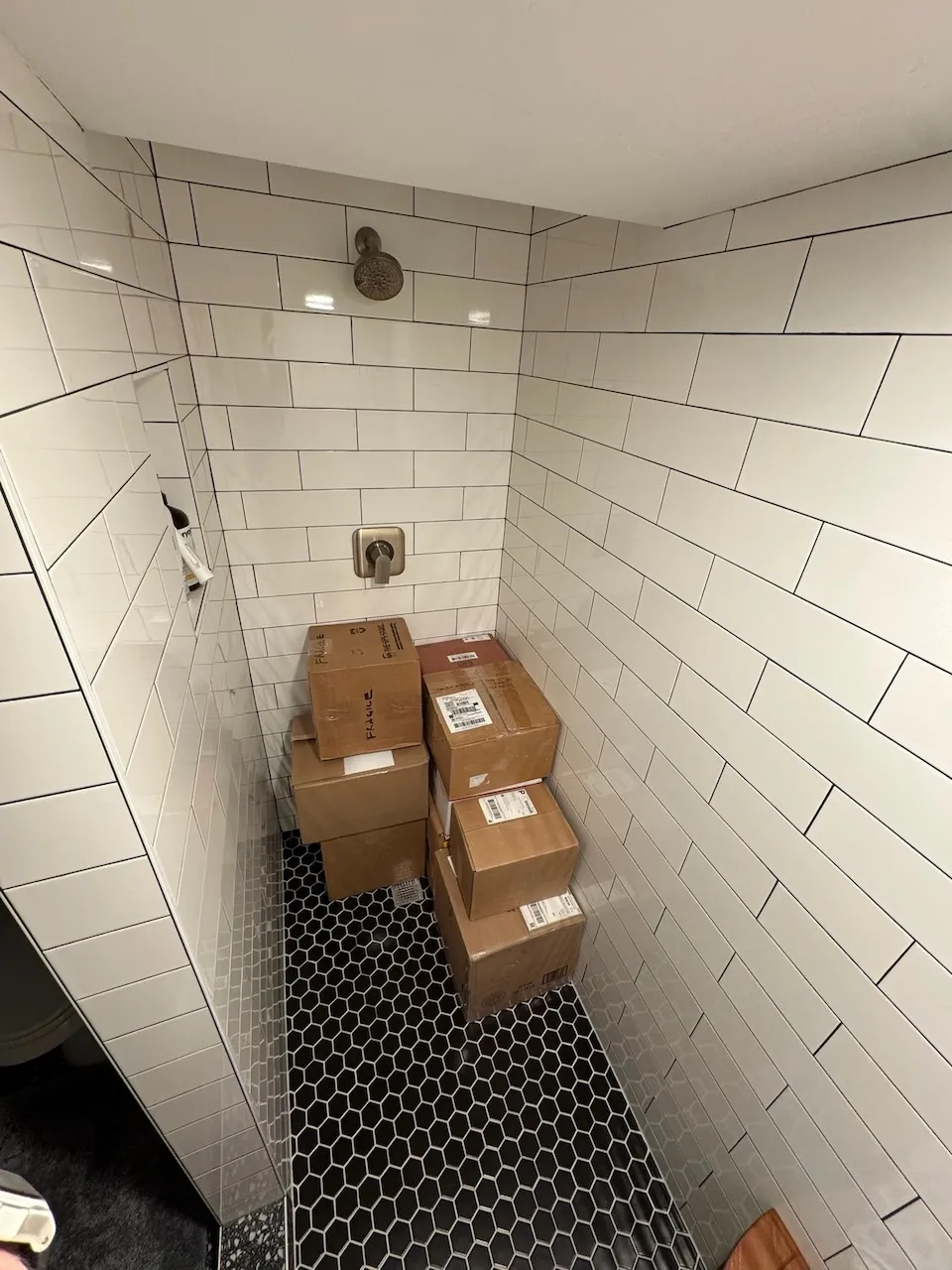
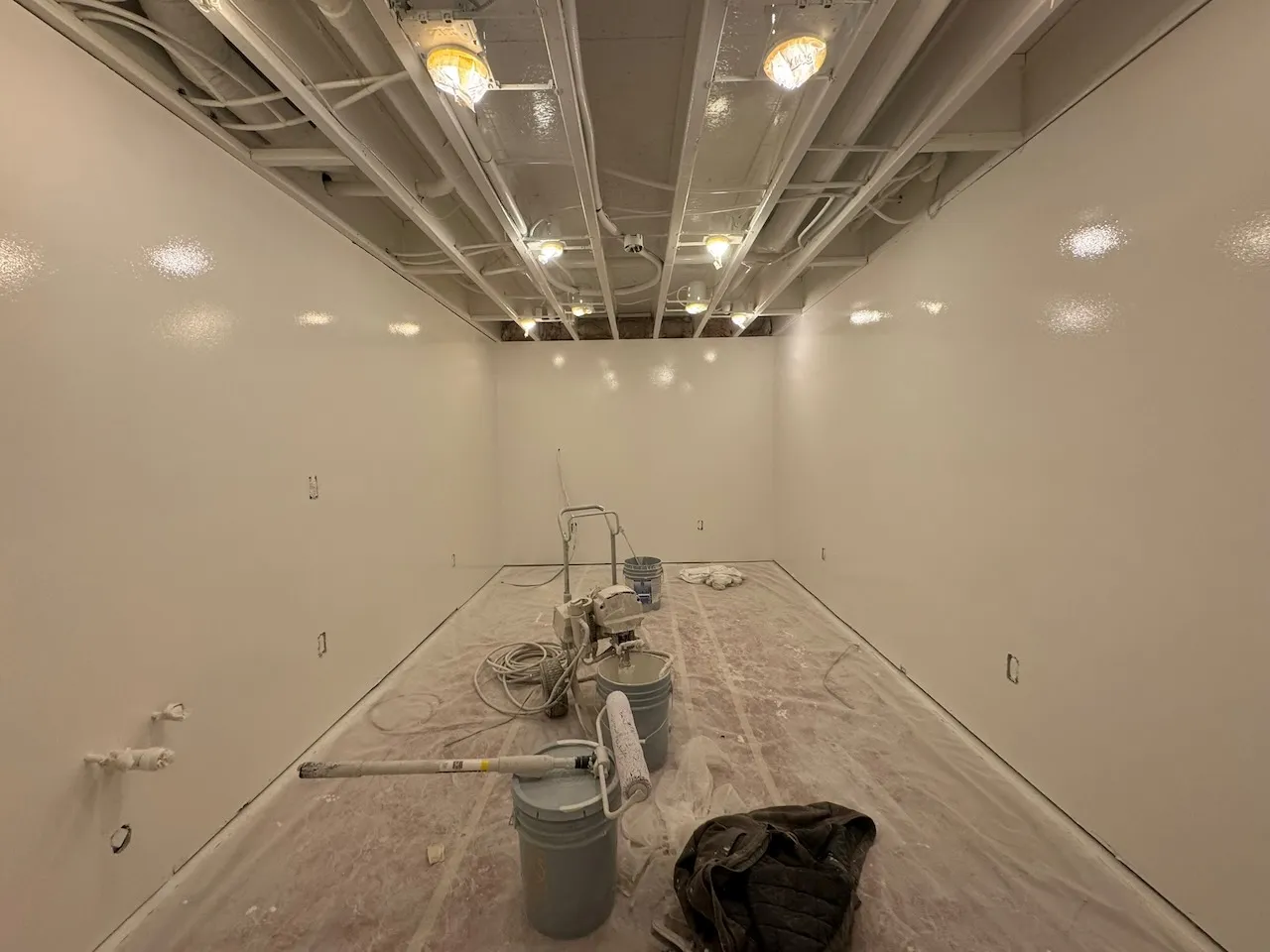
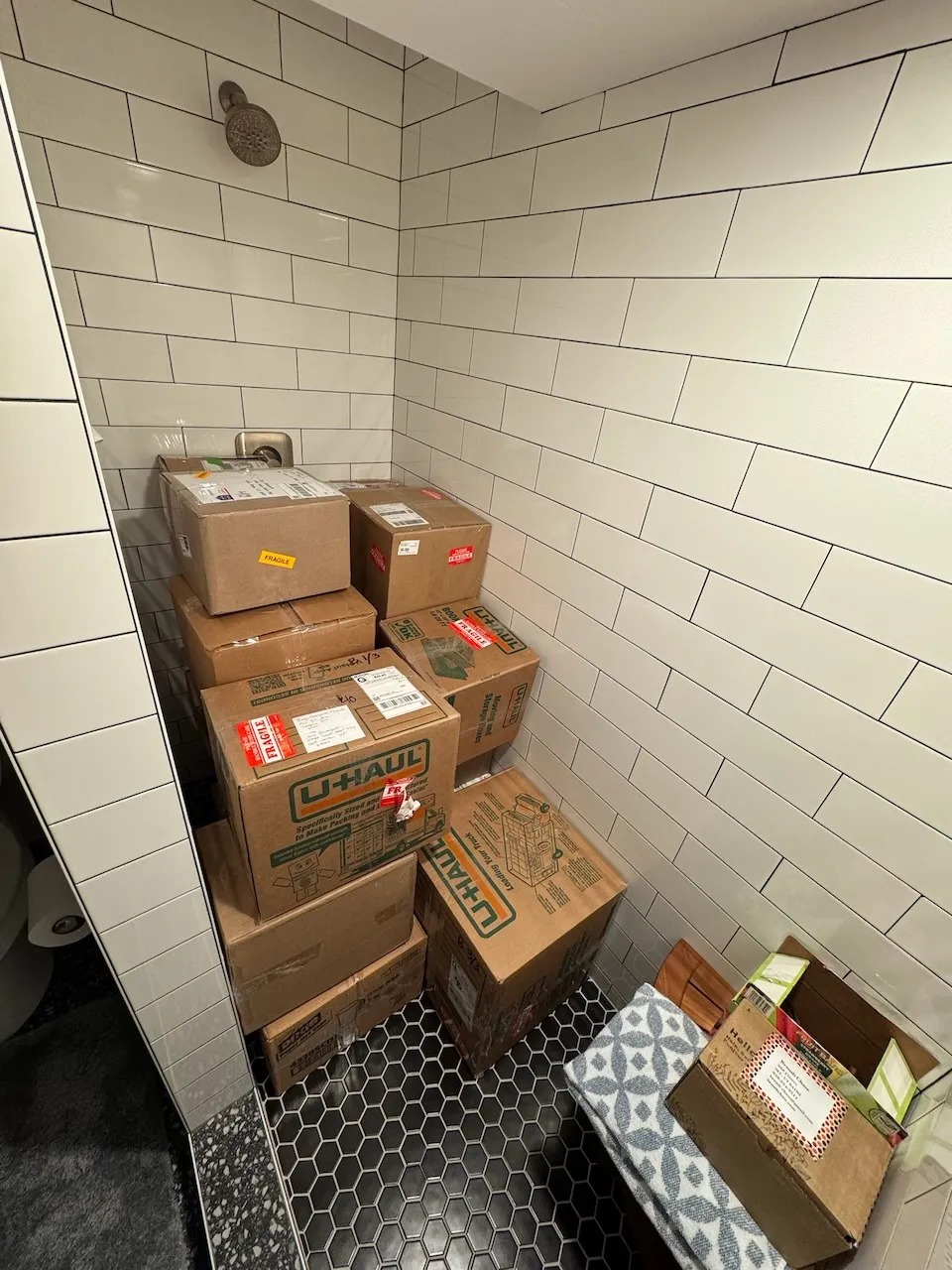
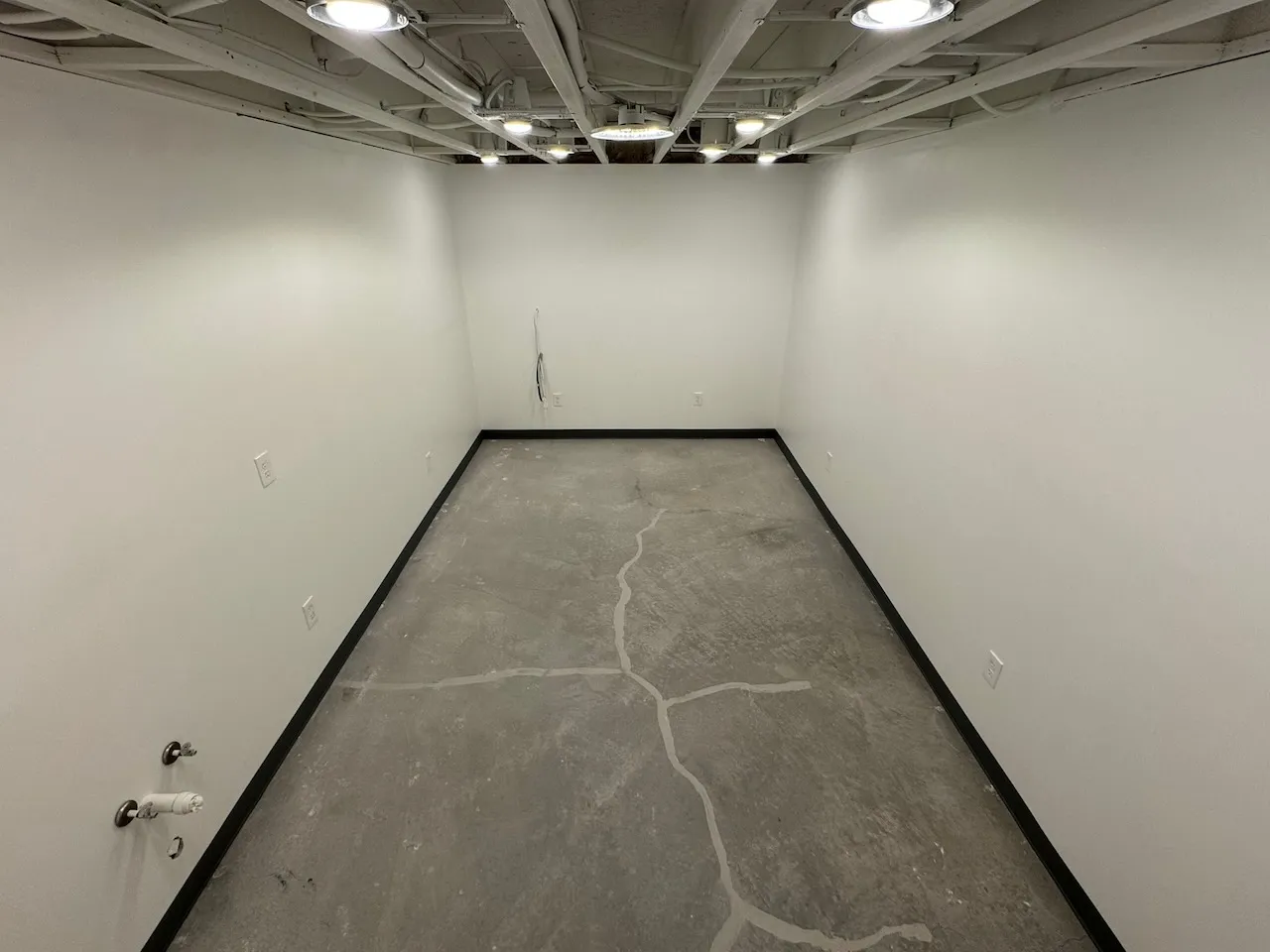
My children took the deliveries at first for an extended Christmas. By the end my seven-year-old had begun greeting the doorbell with a weary “UGH, no more teapots!”
V
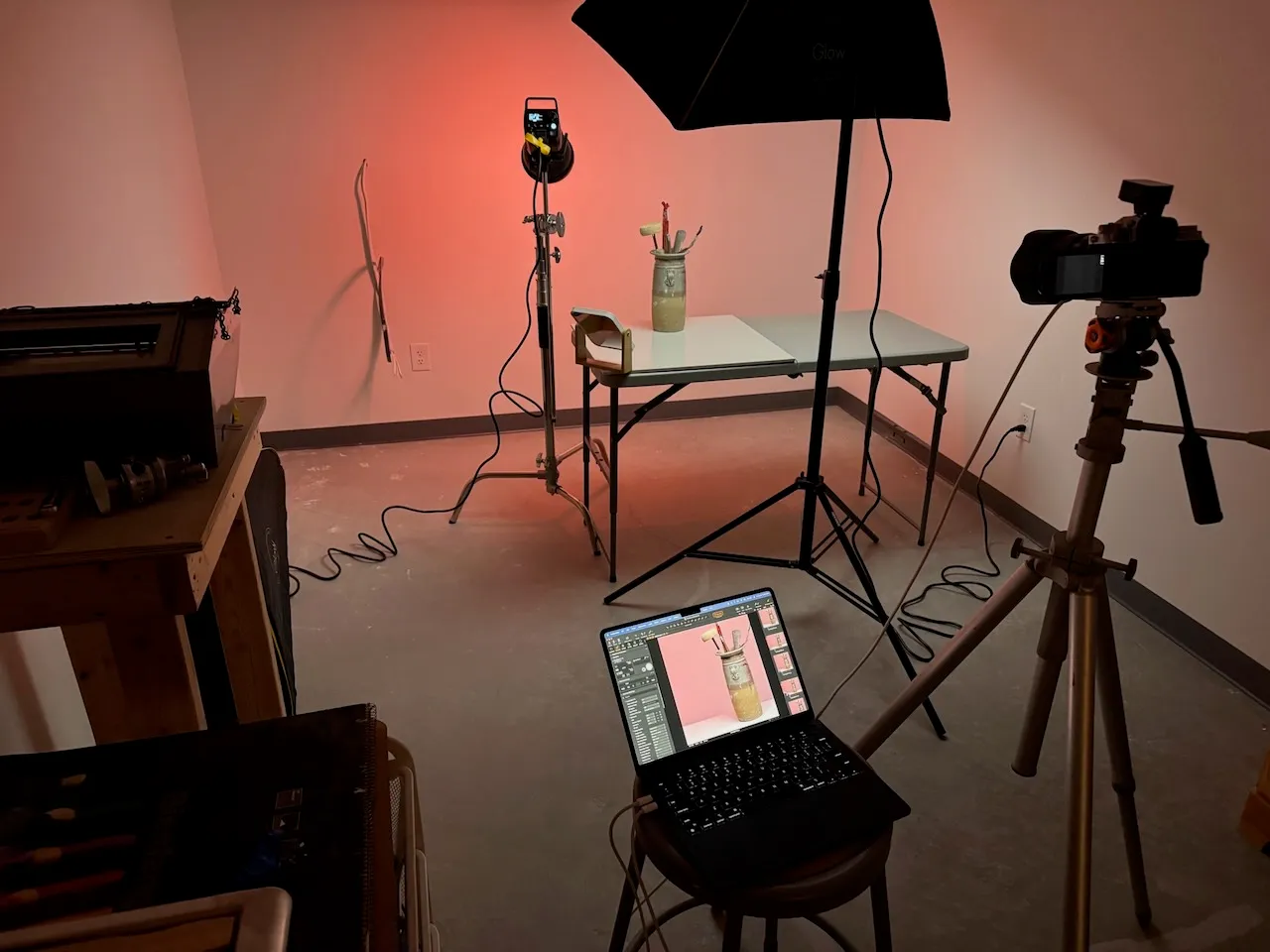
Photography. Sigh. Photographing every teapot turned out to be its own particular problem, arriving one after another like a row of rakes laid in the grass. We started with deciding on the scene, messages flying back and forth between me and Hamish.
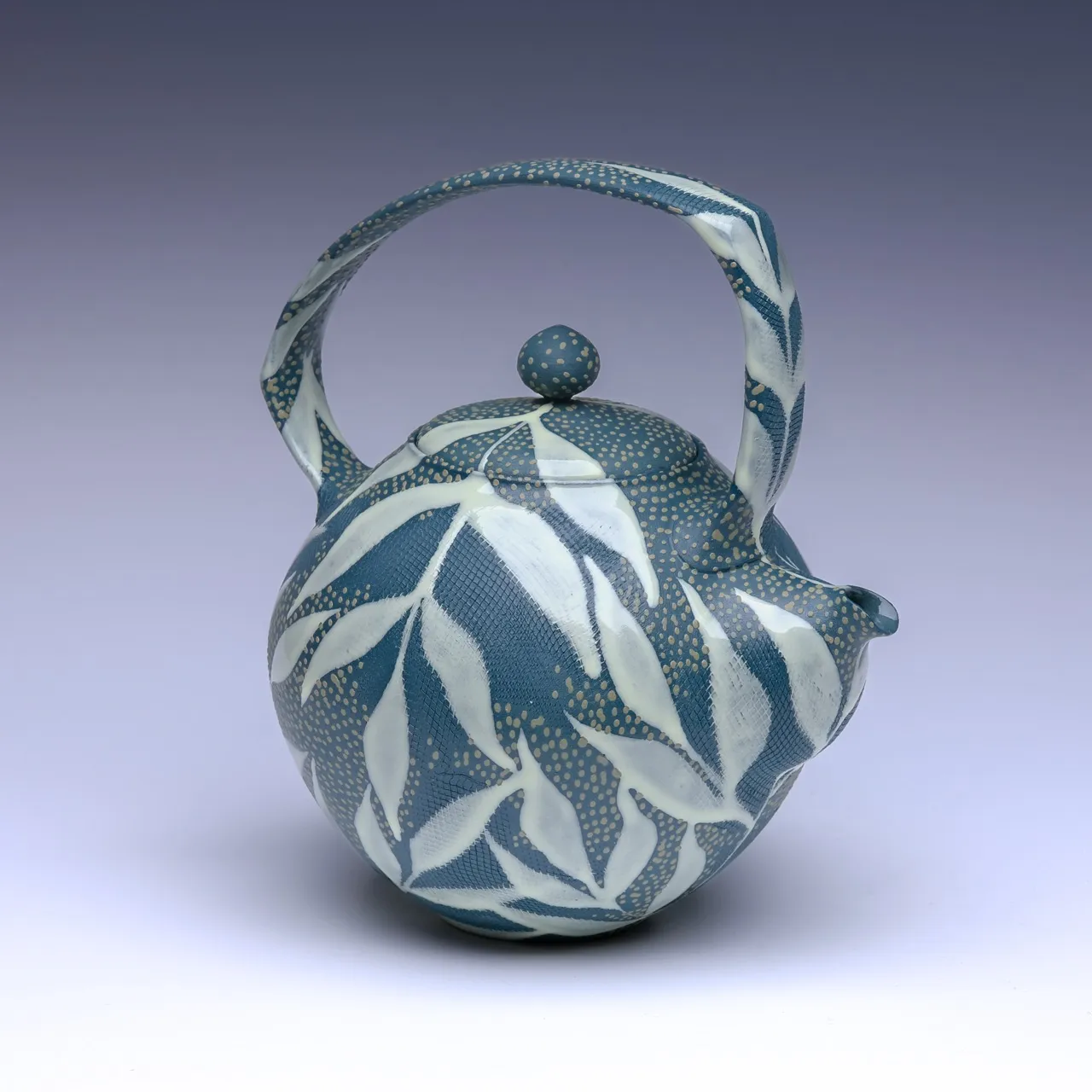
I took pictures using solid backdrops and they read as pop art. I tried textures and they argued with the pots. We settled on the tried and true gradient, which behaved, but asked for fresh light, focus, and aperture with every new pot.
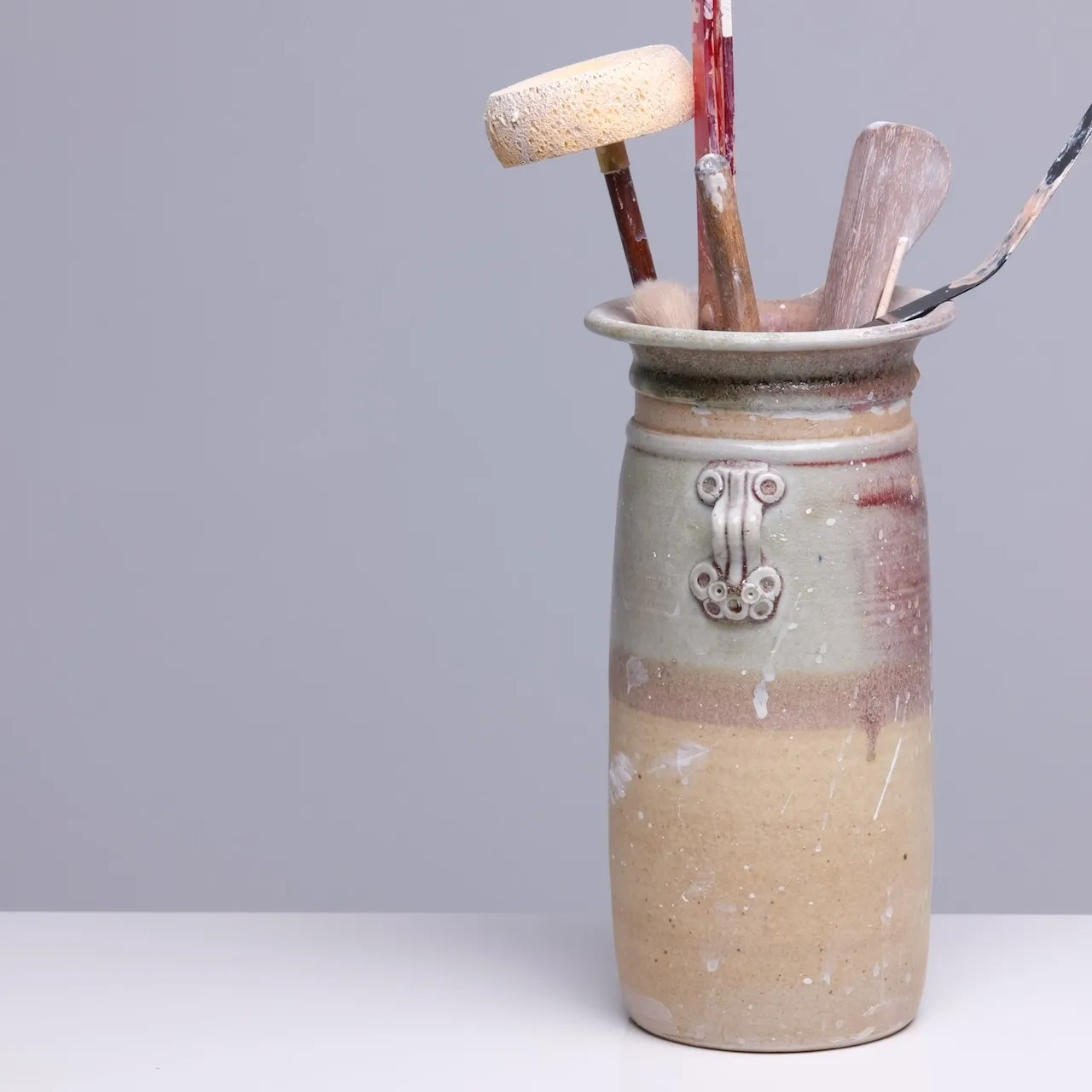
The small teapots needed framing so close the backdrop gradient disappeared. The big ones got the full spectrum of black-to-white. The kyusu, like a certain kind of person, had exactly one angle at which they were willing to be seen.
The shiny ones were a torment, and so were the ones I had wrongly believed were not shiny until my lights found something to catch in them. Every reflection had to be hunted down and quieted with a makeshift apparatus of a coat hanger and pantyhose, and some of those pots seemed engineered to advertise my lack of experience in product lighting.
Underneath all of this ran my actual job, which sent me to London for a week at a pretty uncomfortable moment in the process. I managed to finish shooting the last teapot in the hours before my flight, and London did present a handful of opportunities.
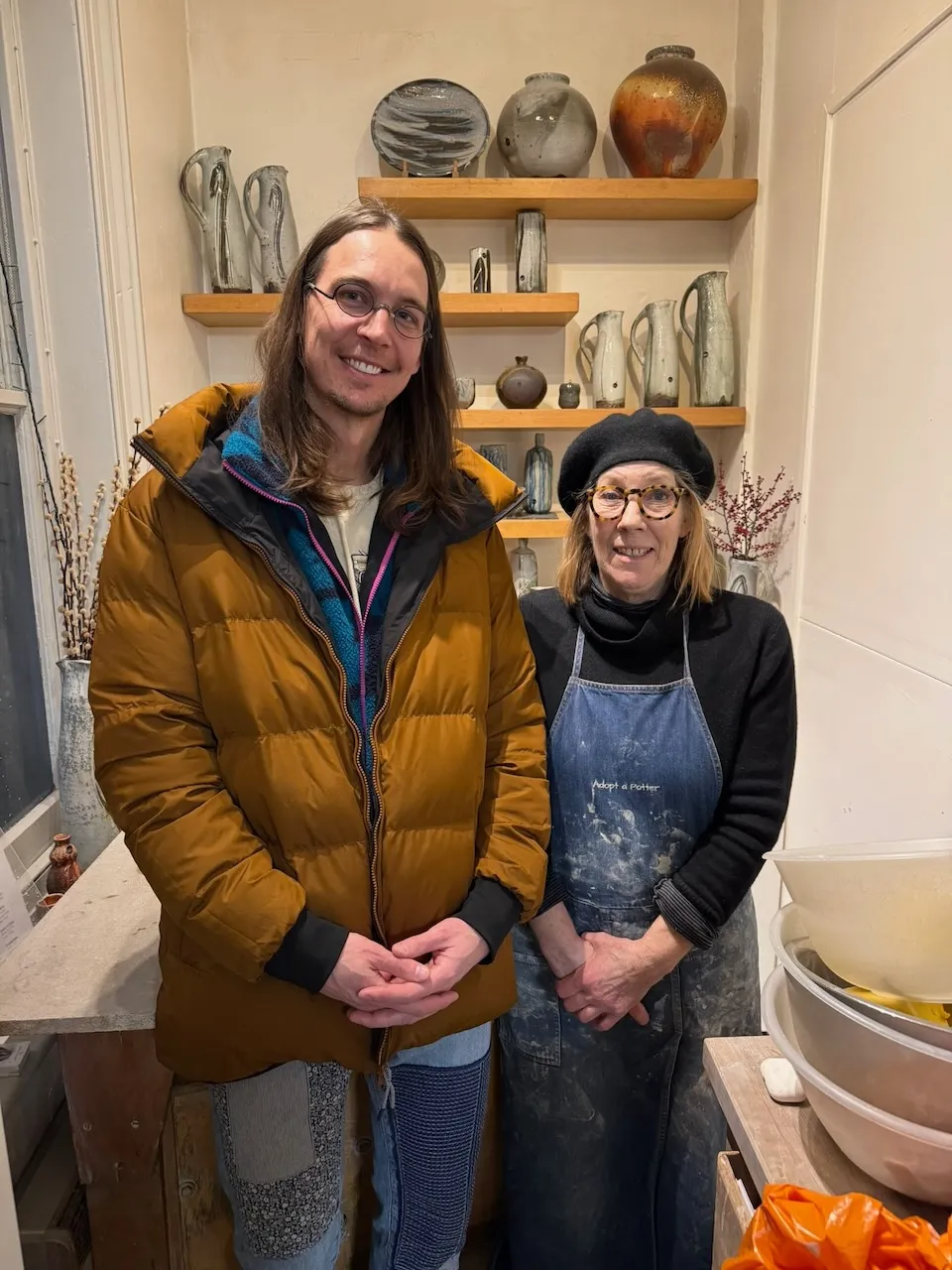
I found time one afternoon to visit Lisa Hammond at Maze Hill Pottery. She was kind enough to receive a large American in a puffy coat who had drifted into her studio as she was closing for the day, and when I told her about the show she smiled in a way that reverberated silence.
I can only guess that she either knew Hamish’s particular brand of ambition (“Yes, I know Hamish…” she said in a fond tone) or merely recognized from long experience the look of two eager friends who had agreed to more than we understood.
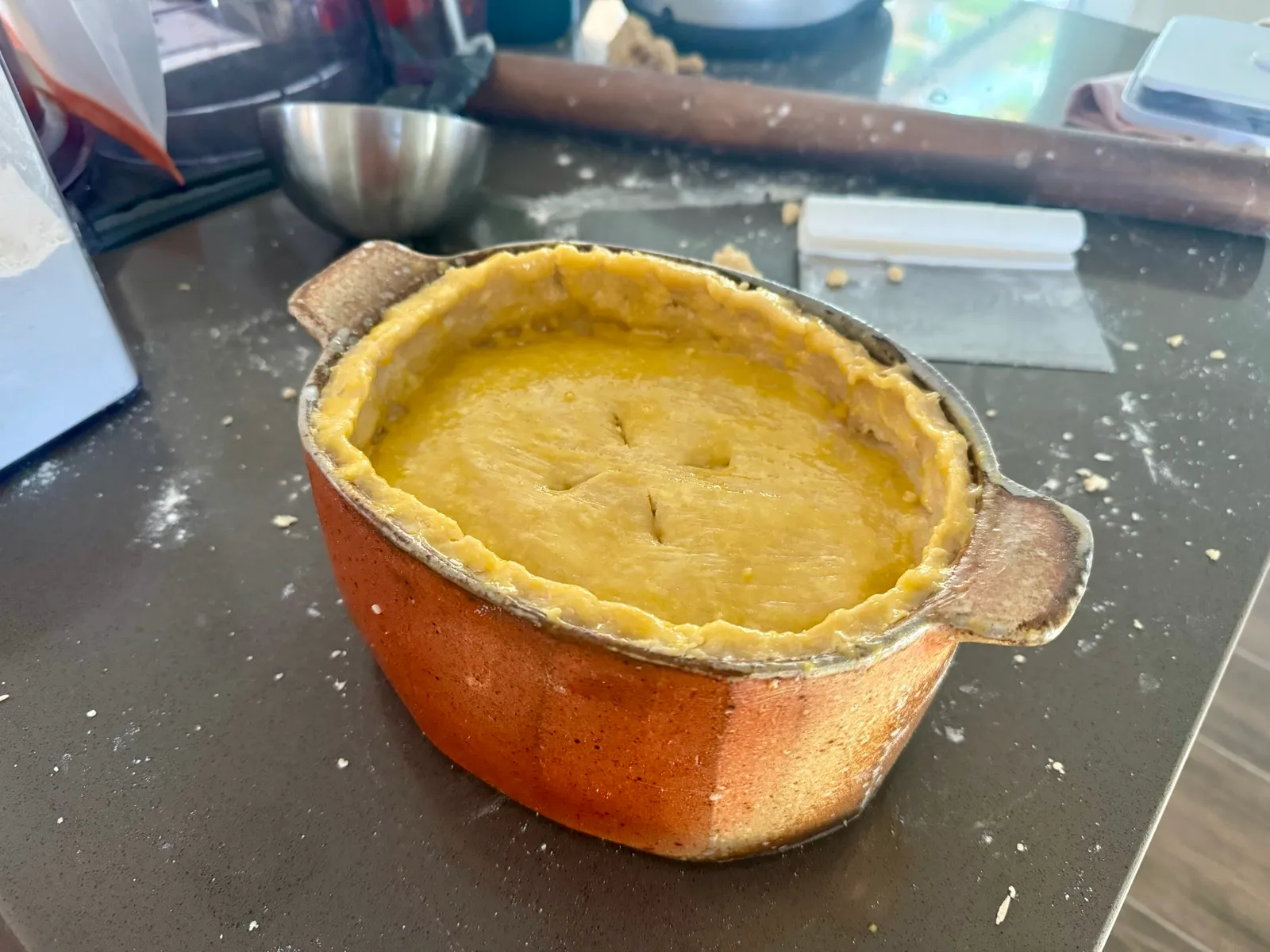
Naturally, I took home a casserole dish.
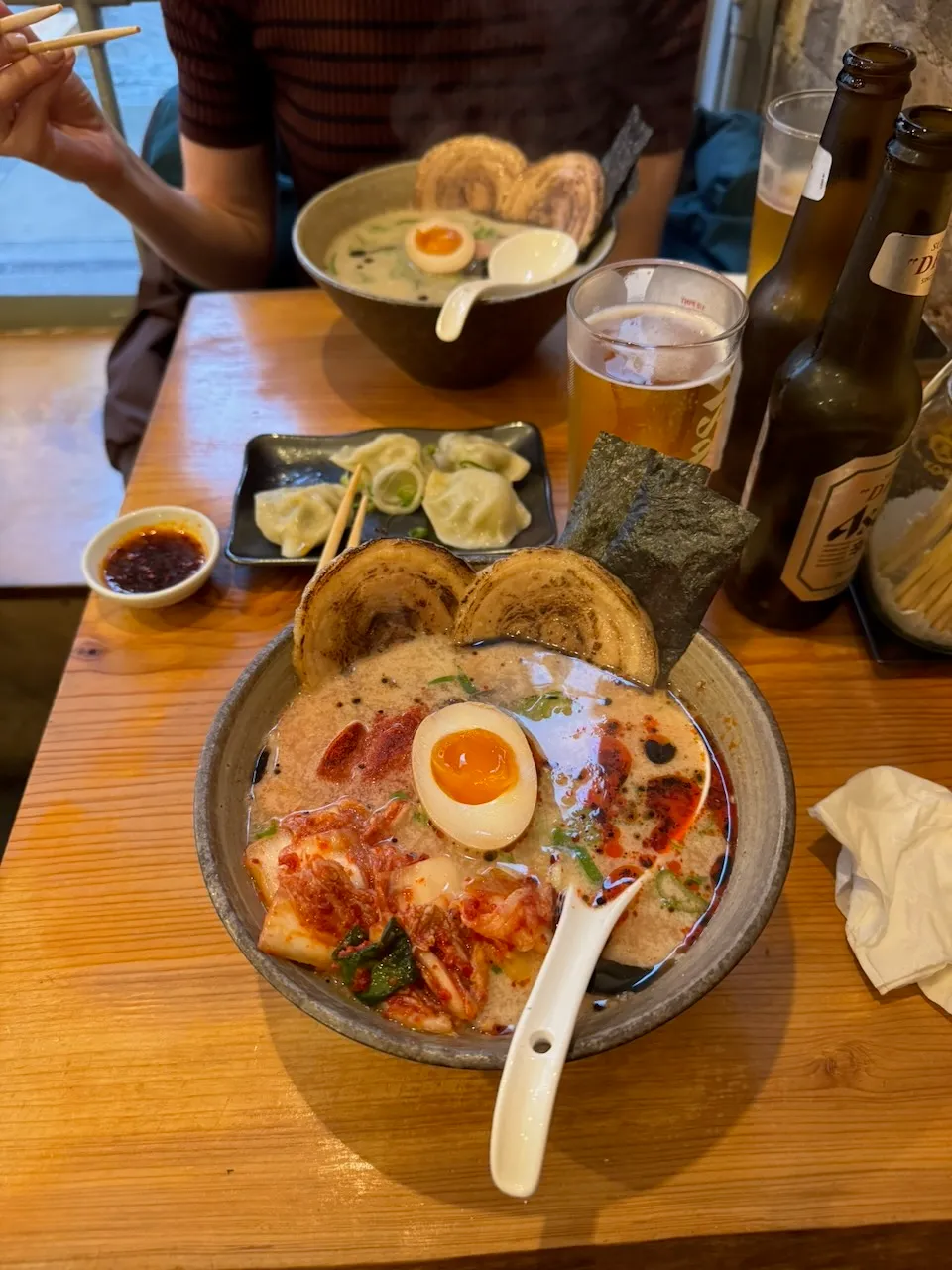
There was also a chance encounter in a ramen shop with a lovely couple from Norway that would send me on an adventure the following year (perhaps more on that in a future post). It may have been a chaotic month, but it was a good and somewhat relaxing way to cap off this first sprint of work.
Returning home from London at the end of February, I immersed myself deep in the editing, coaxing seventy-six very different objects toward looking like one coherent exhibition. I have an obsessive streak that this kind of work feeds, and for all I complained to Hamish, I loved it. Subtly correcting color, lighting, framing of images, one teapot at a time, late into the nights.
VI
March came and went and before we knew it, brought the NCECA conference with it. Hamish had spent the month frantically getting a catalog of the pots put together. I had resumed my regular duties at home and work, and was putting the finishing touches on my home studio.
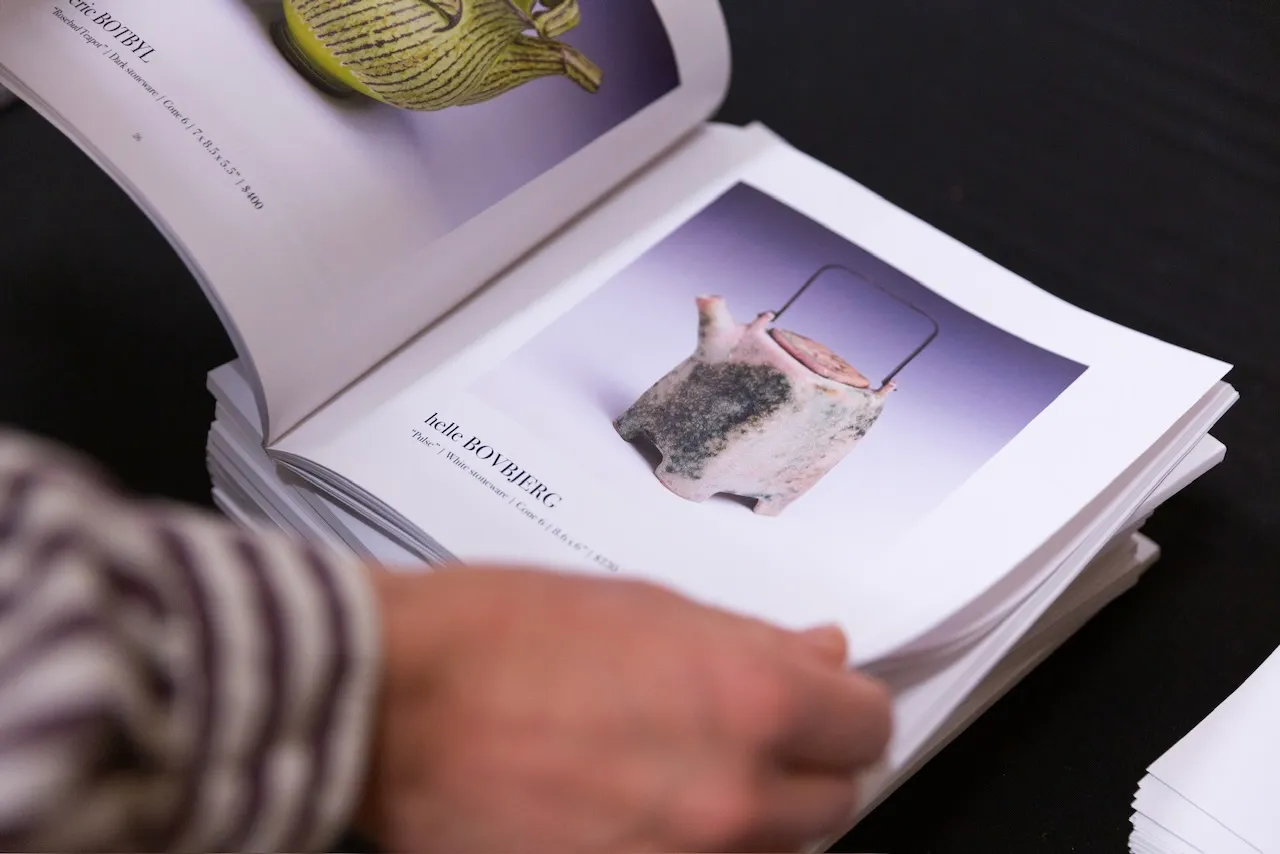
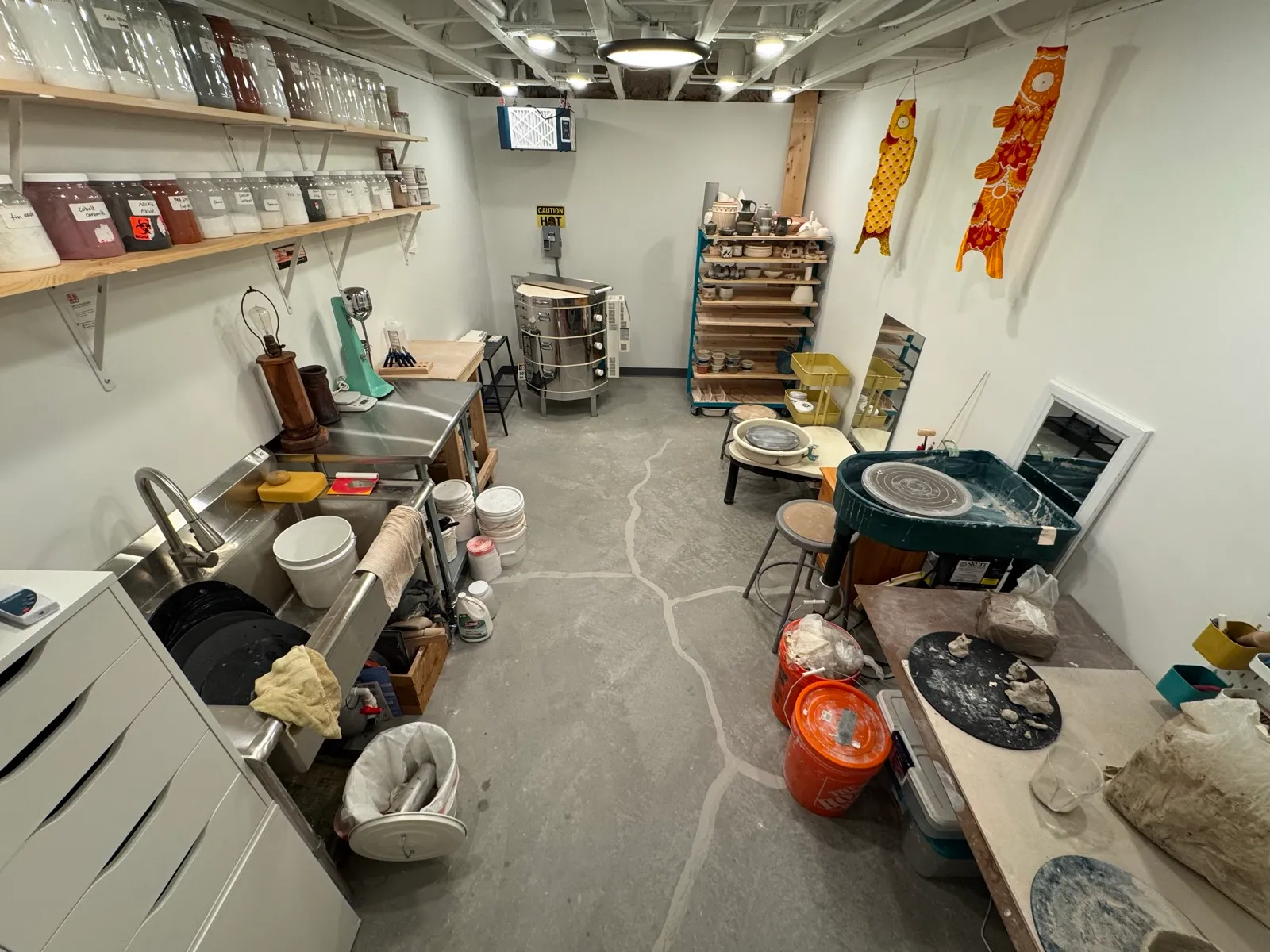
The printed catalogue, photographed by Jon Clare, and the finished studio.
We had Tuesday before the conference to get the show prepared at the convention center. Hamish would be driving in from Oregon that same day, and I played tetris with seventy-six boxed pots fitting into my car, and drove them across the valley to the Salt Palace.


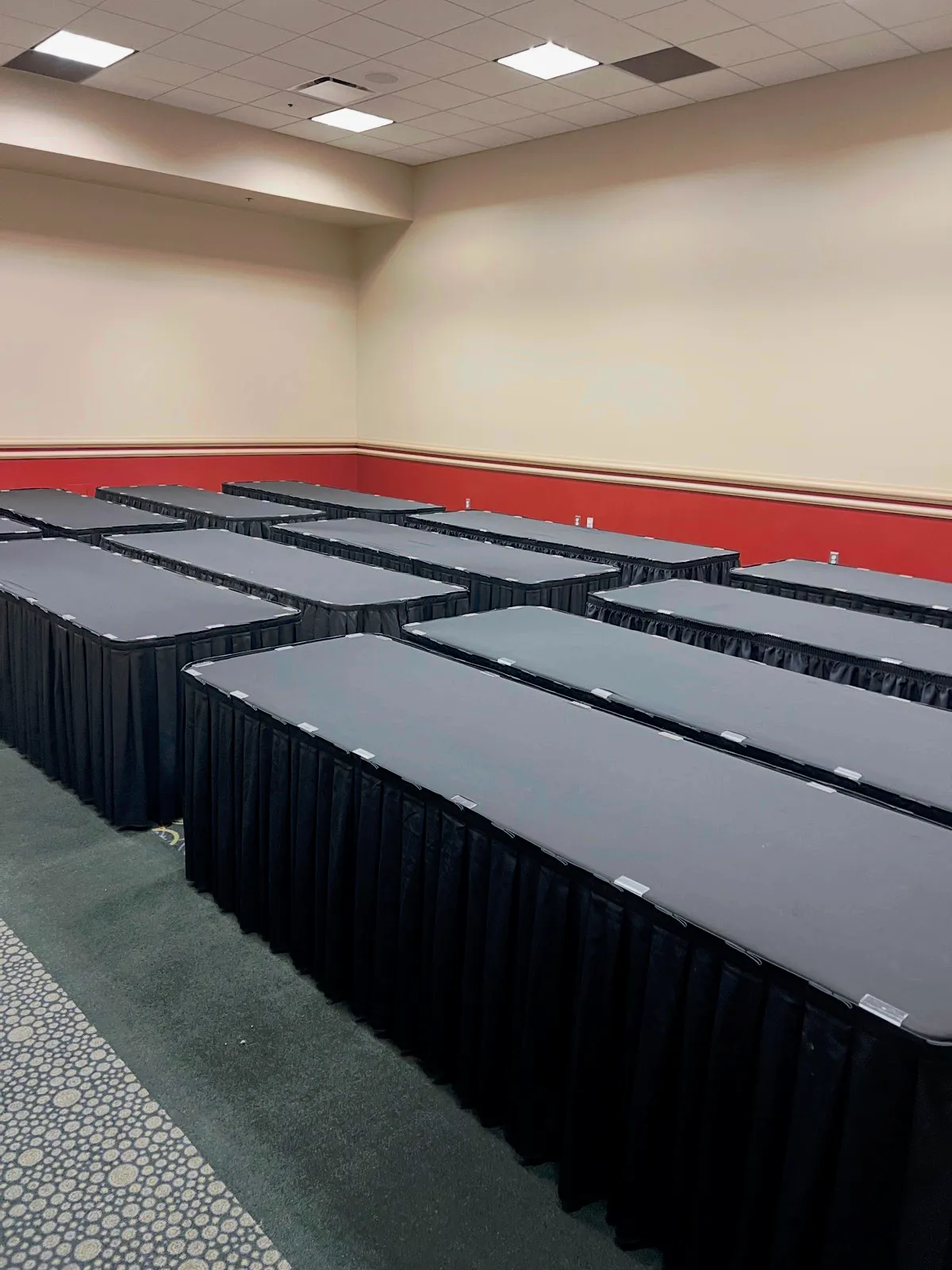
You feel the scale of NCECA the moment you’re inside it. Dozens of exhibitions and talks, thousands of clay people drawn in from everywhere. Our space was a room in a far-off corner of the campus and there was a comfort in that, in being a minor part of a thing this large.
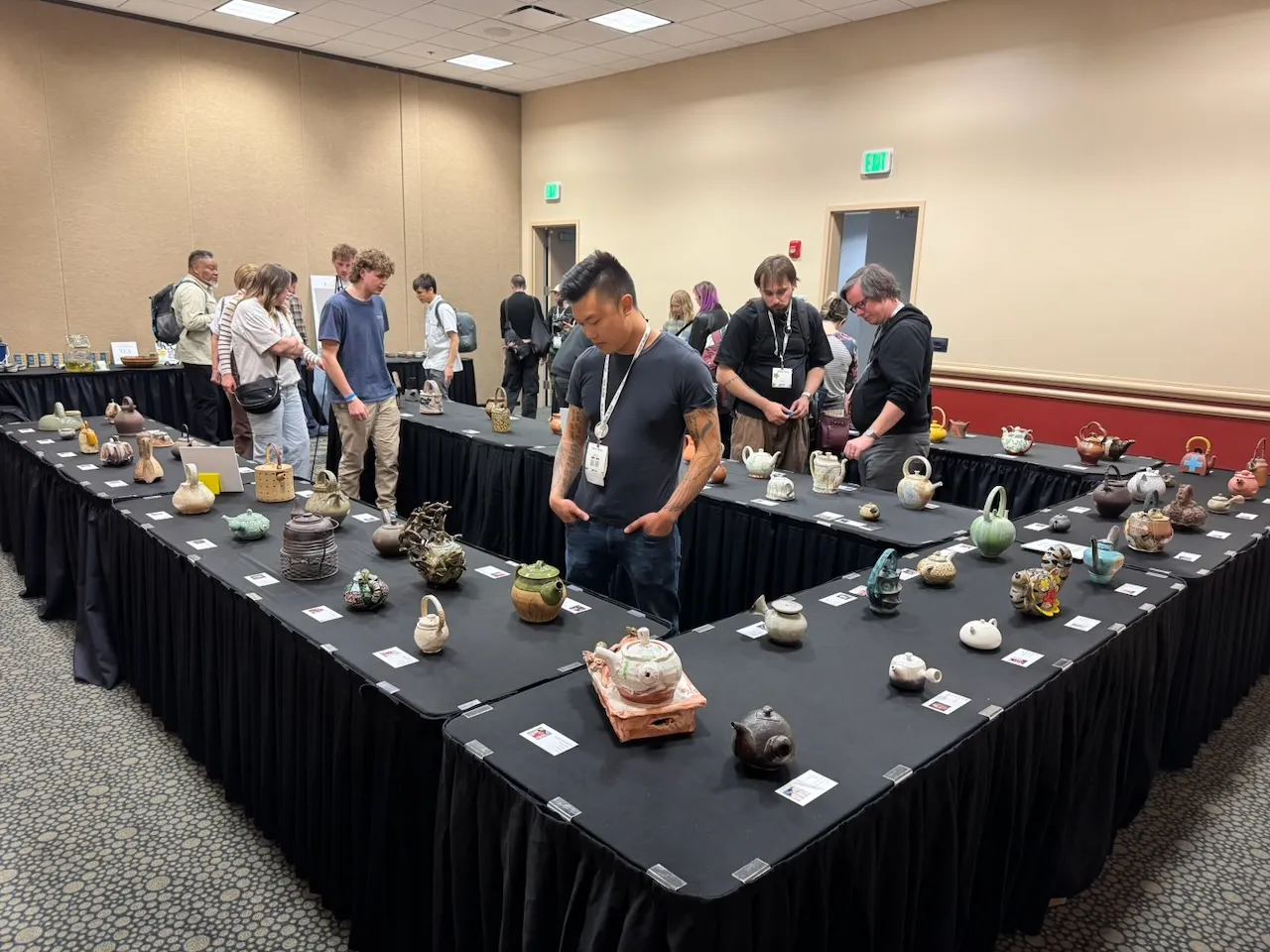
It was a good small room. We borrowed trolleys and carried everything up, and while Hamish gathered volunteers to unbox and arrange the pots, I worked out where to hide seventy-six empty boxes in a space that had a fire code we, uh, pretended not to know about. We tucked them under the tables and trusted the week to be kind.
The show opened on Wednesday with the rest of the convention. The first person through immediately snapped up one of Chris Weaver’s pots, and I let myself take it as a sign. For four days, more came through the door by the dozen.
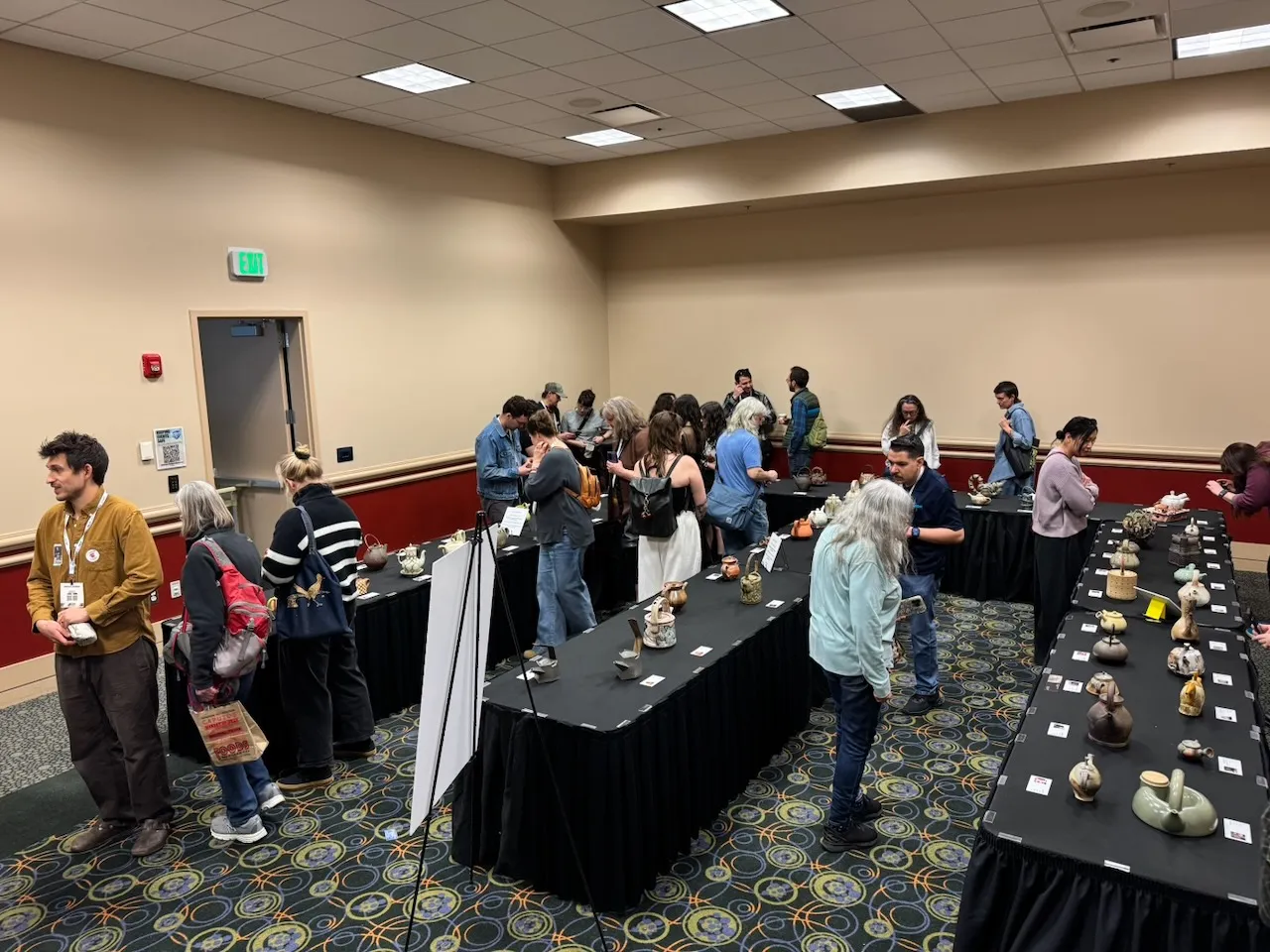
We poured cold-brew tea from Eco-Cha, which meant a constant tide of cups to wash somewhere so they could be reused.
Oh! I have somehow come this far without mentioning that in the weeks leading up to the conference, Hamish had thrown and salt-fired more than two hundred and fifty porcelain teacups embedded with Devil’s Playground granite chunks. Madness.
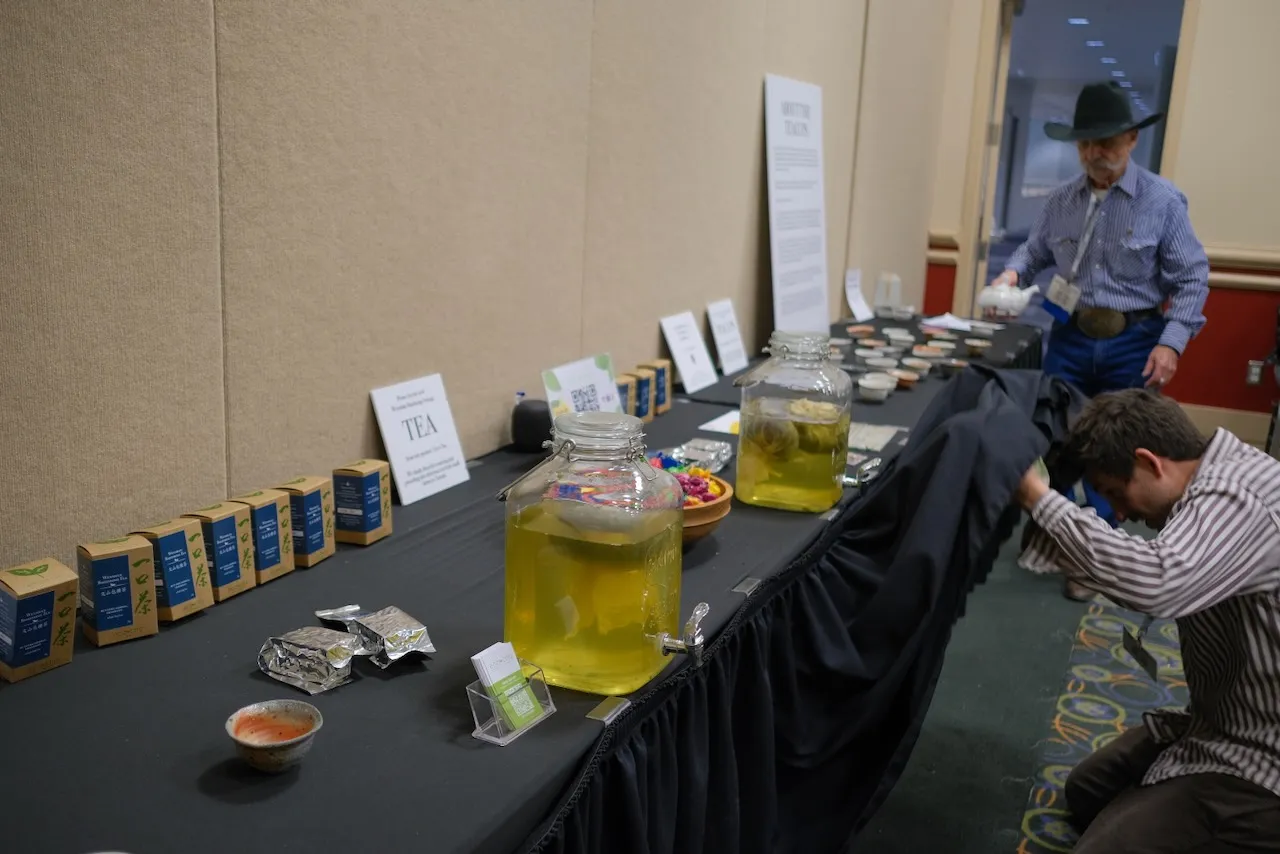
But my wife arrived with a bucket and soap and towels and made the whole operation civilized. She has always had better instincts than two fools preoccupied with how the dirt from their backyards melts.
On the last day we had some fun and let people vote on their favorite pot. Kate Marotz’s work won, and no one disagreed.
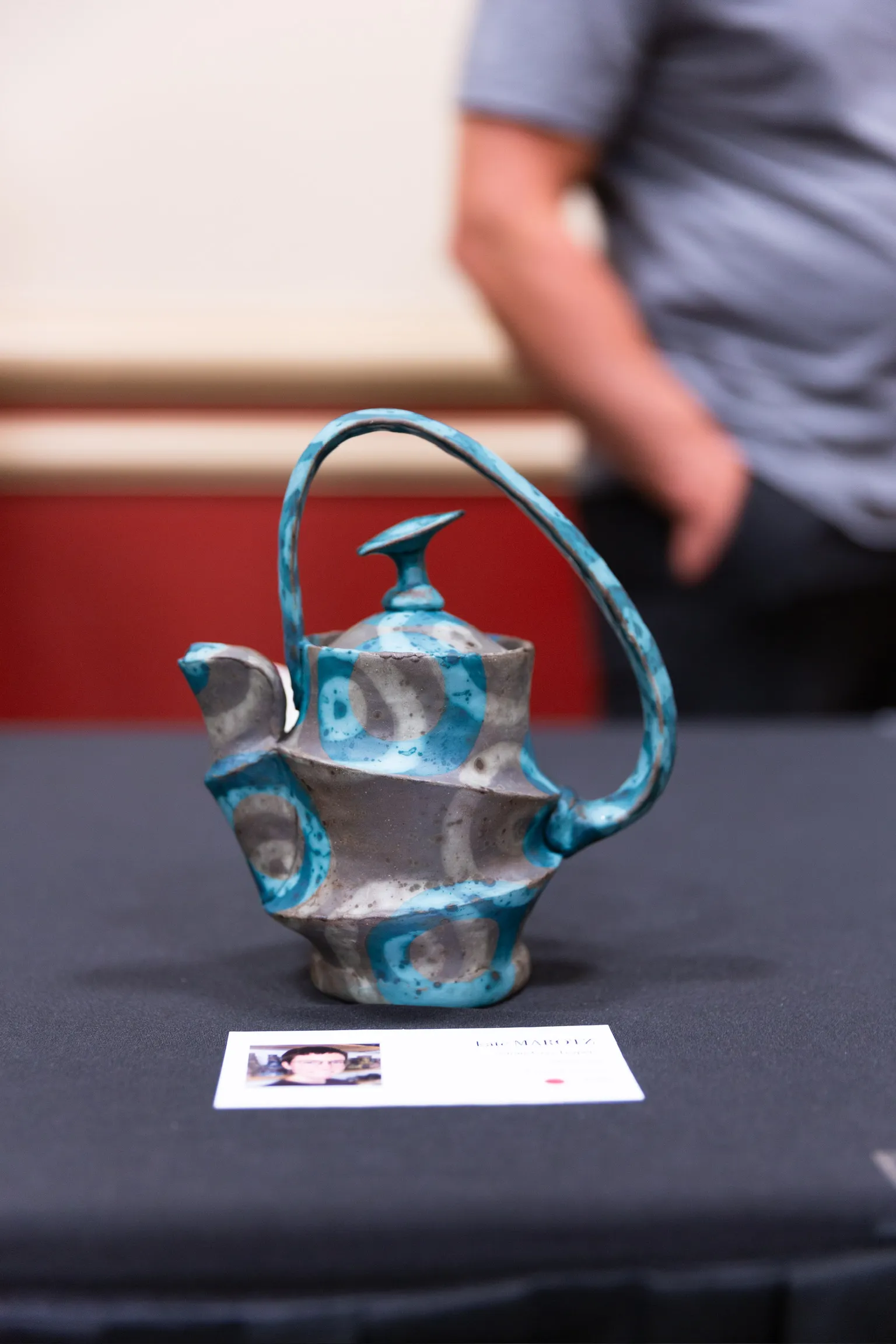
Kate Marotz’s winning teapot. Photograph by Jon Clare.
VII
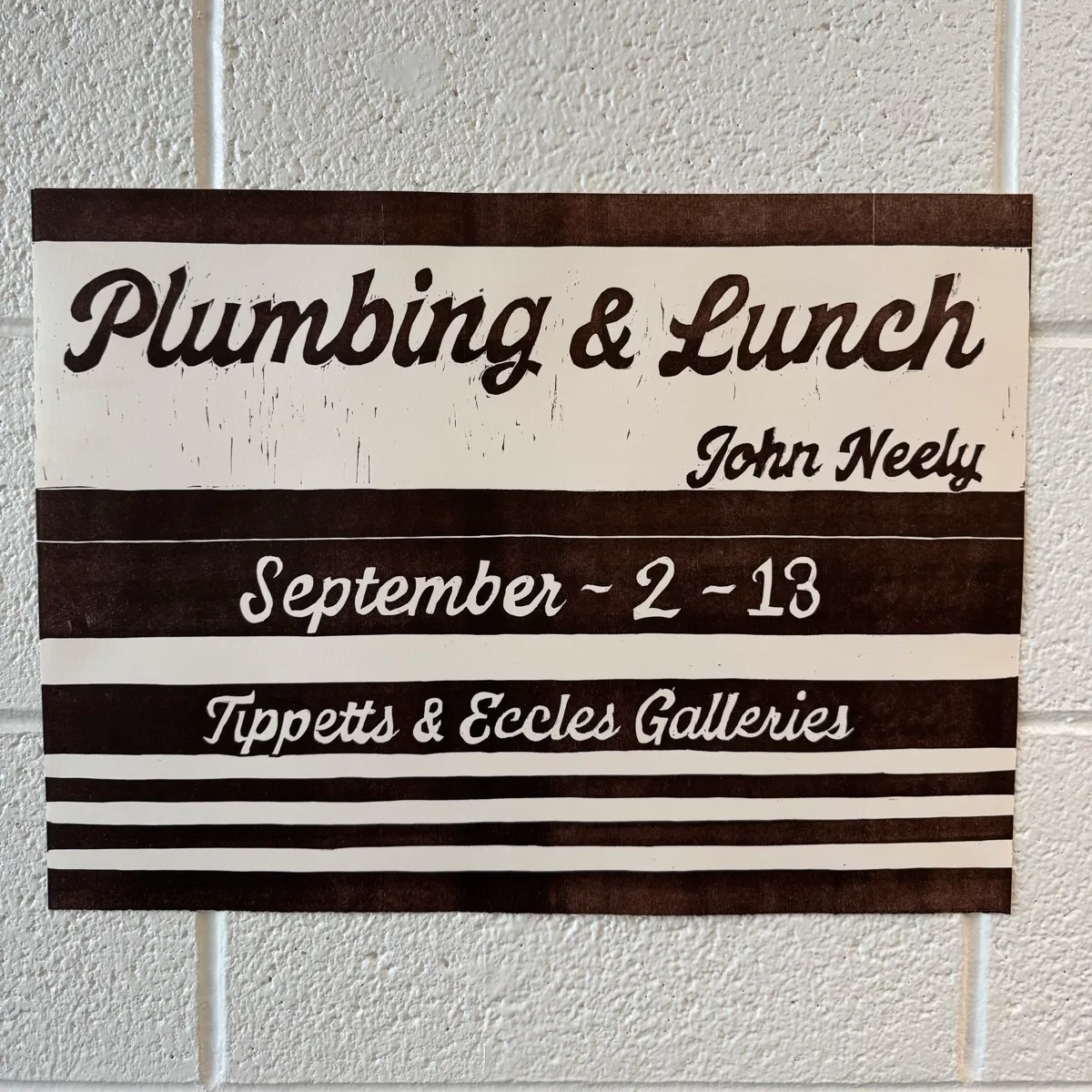
I think that none of this would have happened without John Neely.
When he came to USU in 1984, the center of gravity in regional ceramics lay north of us, at the Archie Bray in Montana, a place he would later tease as “USU North” after the flood of his graduates resumed their exploration of ceramics there.
He designed a wood-fired kiln that spawned an entire genre of effects; once held hostage by hugely inefficient firings but now achievable with a fraction of the fuel. Instead of reaching for a patent he said “build it, adopt it, adapt it,” and potters all over the world now fire in his shadow without always knowing whose it is.
My first encounter with John was much the same, a sensing of a shadow. It was cast on a struggling high school student who stumbled into a pottery class, became obsessed, and was luckily taught by one of John’s own, Todd Young. Todd owned one of John’s teapots, kept it locked up safe in a closet in his classroom, and one day pulled it out for a look. After hours of turning this unglazed black globe over and over in my hands, I couldn’t help but wonder about the maker who made it. All I knew was a shadow.
A show like Hamish’s needs the foundation you get from an educator like John. Not fancy venues, photographs or books, but the temperament, the particular madness that lets a person decide presenting seventy-six teapots to the world is a reasonable way to spend a winter.
Hamish, trained in England and then North Carolina before he ever reached Utah, is exactly the kind of far-flung student that openness drew in, and a show with pots gathered from across the world is the classic result. John knew the quality when he saw it, and he knew it often showed up as nothing more than a temperamental spark of obsession that needed some gentle fanning.
The weight of all of this can be felt in the strange timing of life.
In March, NCECA inducted John as an honorary member. He passed away, without warning, three months later. The show kept me running so hard that his induction was one of the only conference events I managed to attend.
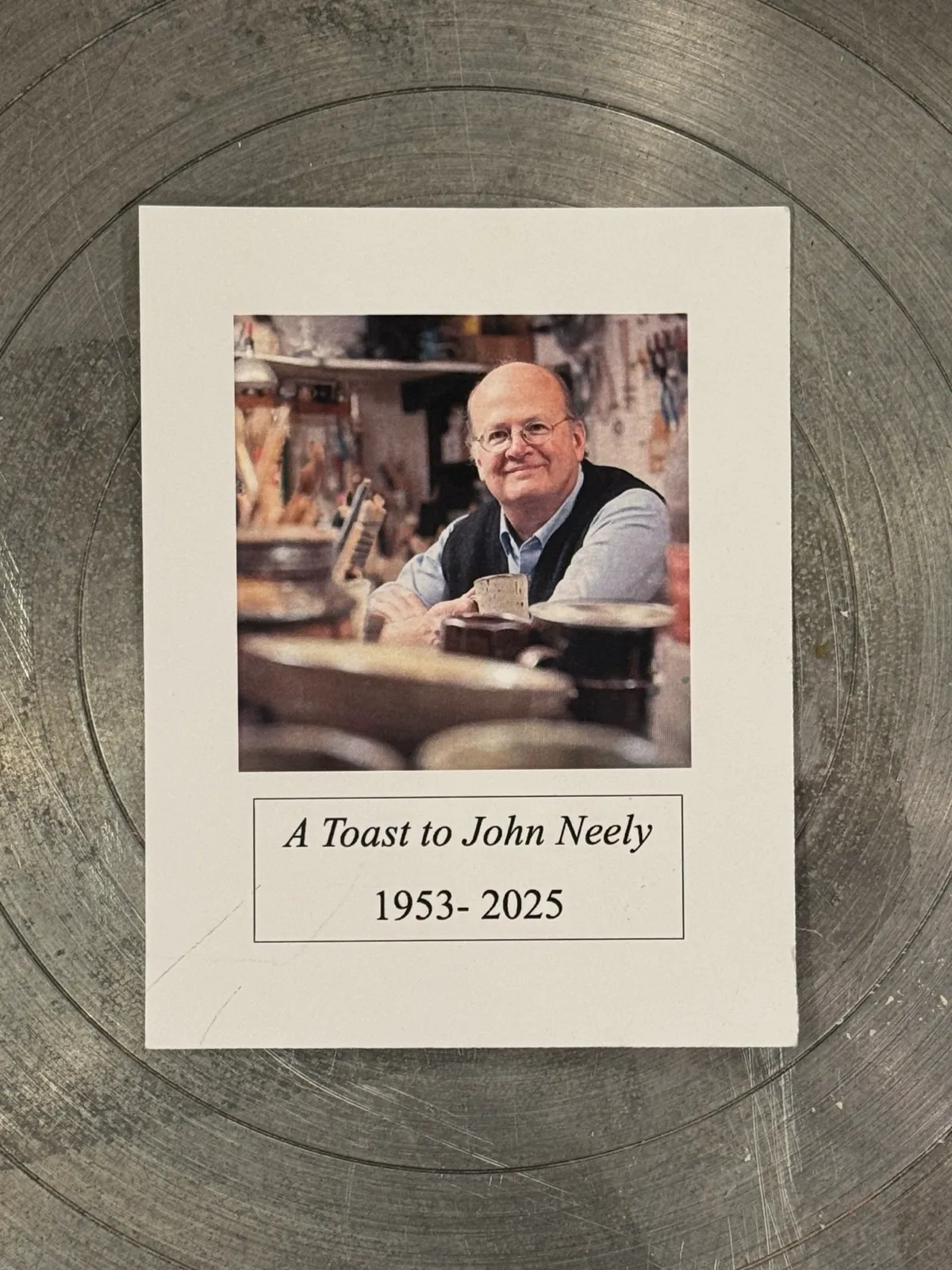
VIII
There is a particular character to the clay world. People are generous of themselves, agreeing to small-sounding things that swell into something vast just like a pot on the wheel, and all the while the work gets done right before your eyes. You offer to help with a teapot show and find yourself running international freight, a photography studio, and a tea service for several thousand.
Maybe it’s that we are already accustomed to the impossible. The clay resists and the kiln has its moods. The glaze, after centuries of study and modern chemistry, still does things nobody can fully explain. When your medium behaves like that, little things like organizing a show where people can be present with a maker – whose work they’ve only ever seen on a three-inch screen – become manageable.
In the end, the show was worth all the effort. We made a book that I’m proud of, some potters sold some pots, and for a few days seventy-six beautiful teapots stood together in one room for people to pick up and turn in their hands.
Some of the best things I’ve done are the ones I walked into sideways. I work alone most of the time, and for a little while wanted to be near the people who understand why a person would drive into the desert for a trunk full of rocks.
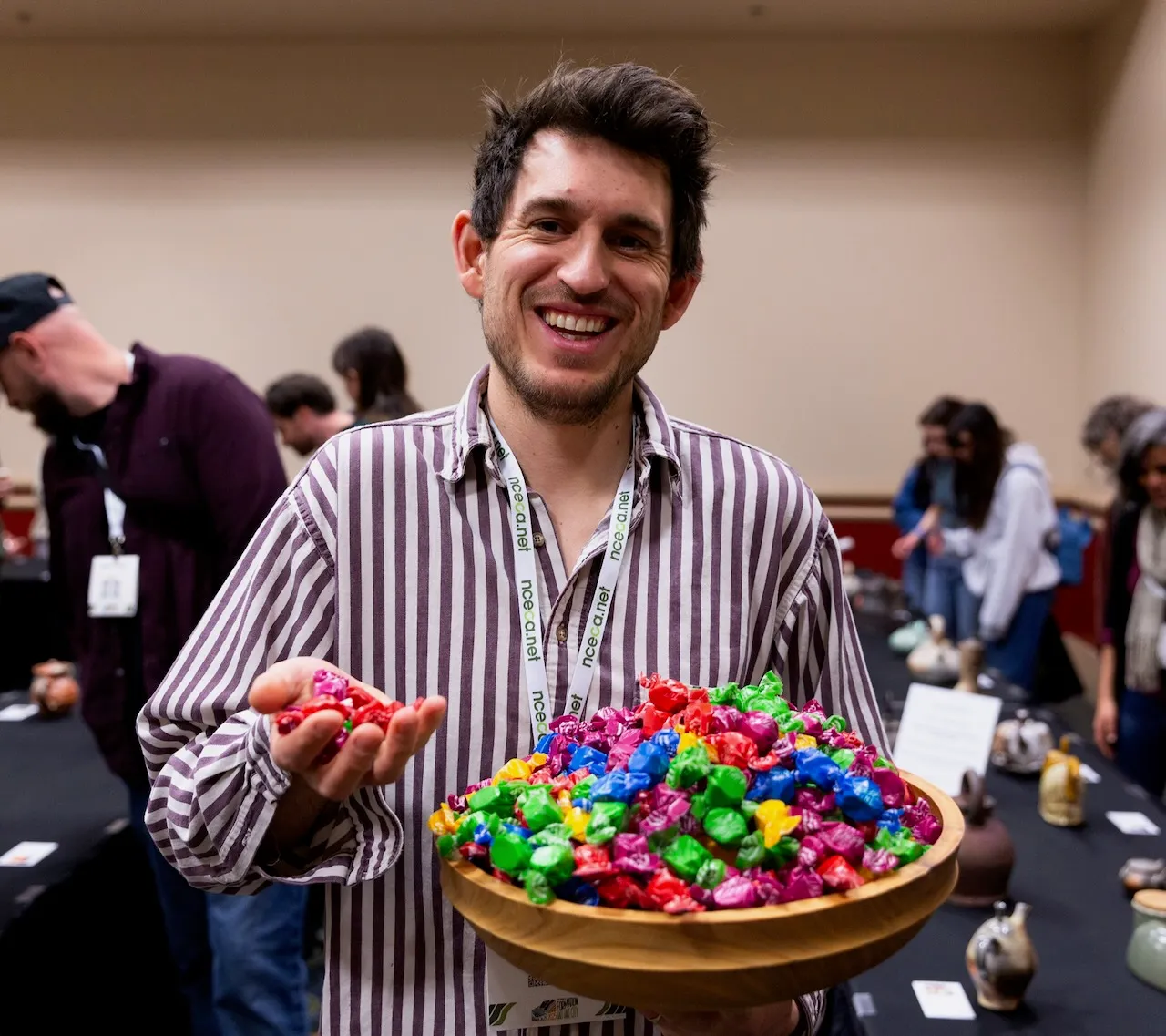
Hamish Jackson at the show. Photograph by Jon Clare.
With thanks to Hamish Jackson for trusting me with 76 irreplaceable pots, to Antra Sinha for pulling me into NCECA, to John Neely for the ground all of us are standing on, and to my family for living three months with teapots in the shower.